






We constantly see things on the internet about cycles that simply aren't true—or are slightly not true. So today, we have a list of 5 things every woman should know about her cycles. Let's get started!
1. You Can't Get Pregnant Every Day of Your Cycle
I don't know about you, but whenever I think about sex education at school, the scene from Mean Girls pops into my head. Here's the thing—despite what most of us were taught at school, you cannot get pregnant any time of your cycle. It's just not how our bodies are designed to work.
You can actually only get pregnant from intercourse during about 5–7 days of your cycle (also known as the fertile window). This accounts for the ovulation event itself (when an egg is released, it's viable for 12–24 hours), as well as the survival of sperm once inside the female reproductive tract (3–5 days with the help of cervical mucus).
2. You Only Ovulate Once Per Cycle
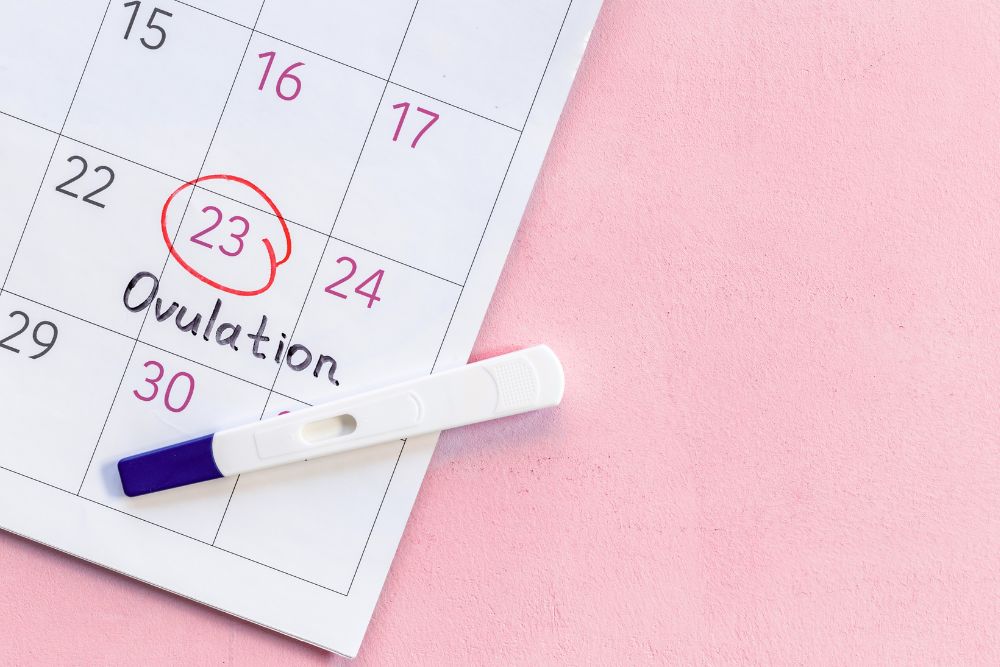
You might now be asking yourself, "But can't I ovulate more than once during a cycle?" Put simply, no. You can release multiple eggs at ovulation, but you cannot ovulate on different days during your cycle.
For example, you can't ovulate today and then ovulate again next week. You can read more about this common myth here.
3. Painful Periods Are Common But They Aren't Normal
I found it interesting that there was a recent article published where period pain was described as causing pain that's "almost as bad as having a heart attack" (Dr. John Guillebaud). And yet how many women have been told that period pain is normal or everyone gets period pain.
We need to stop telling women this, because it's untrue. Yes, it's extremely common, but it isn't normal. If you experience painful periods, it's time to get to the root cause. That's not to say your period won't be uncomfortable (that depends on your definition of discomfort and your body)—but it shouldn't be painful.

4. There Is Meaning Behind Cervical Mucus
Every woman produces cervical mucus—and it's incredibly beneficial! Many times, we're led to believe that any vaginal discharge is somehow dirty or shameful. In fact, it's a normal part of the life of a woman.
I remember reading an account once where a woman repeatedly went to her doctor each month thinking she had a vaginal infection, only to find out later that it was just regular cervical mucus (the worst part was that the doctor kept prescribing her antibiotics for an "infection").
More than that, cervical mucus has a lot to tell us about where we are in our cycles and about hormone health in general. If you're currently trying to conceive, then cervical mucus is your friend and guide. Not only does it indicate to you when you're fertile, but it also plays a crucial role in helping sperm survive and find the egg during conception.

5. Not Everyone Has a 28-Day Cycle, Nor Do We All Ovulate on Day 14
No, you likely don't ovulate on day 14 every cycle (or maybe never) and that's fine! Only a very small percentage of women actually ovulate on day 14. Every body and even every cycle can be different and can also be impacted by a number of factors.
So if you don't have a 28-day cycle, and if you don't ovulate on day 14—you're with the majority.