



When to Start (And Stop) Progesterone: A Simple Guide for Women Trying to Conceive
Progesterone supplementation can support the luteal phase, but timing it precisely after confirmed ovulation is critical. More importantly, low progesterone is a symptom—not the primary problem—and addressing root causes (egg quality, gut inflammation, autoimmunity, and HPA-axis/stress) is essential for long-term fertility success.






Published August 17, 2026

Understanding Your Luteal Phase: The Missing Piece in Your TTC Journey
If you’re trying to conceive, you likely know the quiet anxiety of the two-week wait. You’re charting basal body temperatures, timing ovulation predictor kits, analyzing every slight body twinge, and hoping with everything you have for a sticky embryo.
When month after month yields a negative test—or when early spotting arrives before your period is even due—it’s easy to feel like your body is working against you. Very often, the missing piece of this puzzle comes down to progesterone and a condition known as Luteal Phase Deficiency (LPD).
To understand why your luteal phase might be falling short, it helps to look at what your body is naturally designed to do during a healthy cycle.
How a Healthy Luteal Phase Supports Conception
The second half of your menstrual cycle—the stretch between ovulation and your period—is your luteal phase. It is the biological stage where implantation actually happens.
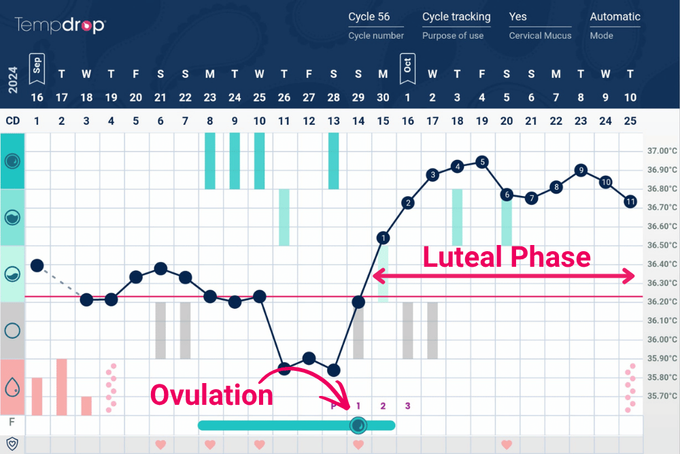
- 1. The Corpus Luteum Forms: Once your body releases a mature egg at ovulation, the follicle that held that egg transforms into a temporary gland called the corpus luteum.
- 2. The Progesterone Surge: The corpus luteum becomes your body’s primary progesterone factory. Progesterone warms your basal body temperature, transforms the uterine lining into a lush environment for an embryo, and holds that lining securely in place.
- 3. The Implantation Window: In a healthy cycle, the luteal phase lasts between 12 and 16 days. Progesterone levels peak around 7 days post-ovulation, reaching levels generally above 10 ng/mL* to ensure an embryo has ample time to implant and thrive.
What Luteal Phase Deficiency (LPD) Looks Like in Real Life
When your body doesn't produce enough progesterone, or can't sustain it for the full two weeks, you experience a luteal phase defect. Instead of clinical jargon, here is how that usually shows up when you're trying to conceive:
- Shortened Cycles: Periods arriving early or a luteal phase that lasts fewer than 10 days.
- Premenstrual Spotting: Light brown or pink spotting several days before your actual period starts.
- Implantation Failure or Early Loss: A uterine lining that begins shedding too soon, preventing a fertilized egg from securely attaching.
If you’ve brought these frustrating cycle patterns to a doctor, you may have simply been handed a progesterone prescription and sent on your way. But starting supplementation without asking why your levels are low in the first place misses the bigger picture.
Progesterone Is a Signal, Not the Problem
Low progesterone most often traces back to one root cause: poor egg quality. The corpus luteum — the temporary gland that forms after ovulation and is responsible for producing progesterone — is made from the very same granulosa cells that surrounded your egg. If those cells were nutritionally depleted, inflamed, or functioning under chronic stress, the corpus luteum they produce will be weaker, and the progesterone output will reflect that. In other words, the quality of your egg and the quality of your luteal phase are deeply interconnected.
This is why optimizing egg quality before reaching for a prescription is so essential. A 90-day egg quality protocol — addressing nutrition, mitochondrial support, oxidative stress, and circulation — can meaningfully shift both egg quality and the luteal phase that follows it.
But beyond egg quality, there are several other root causes of low progesterone that deserve your attention. Let's walk through them.
Root Causes of Low Progesterone (Beyond Egg Quality)
Gut Inflammation
Your gut and your ovaries are in constant conversation. When the gut lining becomes permeable and bacteria enter systemic circulation, this creates a state of low-grade inflammation that can reach your reproductive organs directly.
Additionally, research on the gut microbiome has confirmed that microbial imbalance (dysbiosis) directly affects steroid hormone metabolism. Gut bacteria encode key enzymes that regulate how steroid hormones like progesterone are biotransformed and recycled in the body (Jiang et al., 2024). When the microbiome is disrupted, this hormonal conversation breaks down.
What This Means For You: If you're dealing with bloating, constipation, loose stools, food sensitivities, or a history of gut infections, gut healing should be a central part of your fertility protocol — not an afterthought.

Autoimmune Conditions
Autoimmune activity is one of the most underdiagnosed contributors to luteal phase deficiency, especially in women who are otherwise "unexplained." The immune system plays a crucial role in ovulation, implantation, and corpus luteum function — and when autoimmunity is in play, that coordination breaks down.
Research has also found that women with Hashimoto's and Graves' disease show significantly reduced ovarian reserve—lower AMH and antral follicle counts—compared to women without these conditions (Mancebo et al., 2023; Gzgzyan et al., 2023). Other studies consistently show women with lupus having lower progesterone across the menstrual phases, as well as broader hormonal dysregulation (Chen et al., 2026).
The broader scientific consensus is that the hormonal milieu and immune system are deeply intertwined in women, and that autoimmune conditions significantly regulate progesterone levels and reproductive outcomes (Desai & Brinton, 2019).
What This Means For You: If you have a short or weak luteal phase, working with your physician to get a full autoimmune thyroid panel (TSH, Free T3, Free T4, anti-TPO, anti-TG) and a broader autoimmune screen, if indicated, is an essential workup.

Pregnenolone Deficiency and the Cortisol Steal
Here's something most fertility conversations skip entirely: your body makes progesterone and cortisol from the same upstream building block, a natural hormone known as pregnenolone. When you're under chronic stress, your adrenal glands have an urgent demand for cortisol. If pregnenolone is limited, the body will divert it toward cortisol production at the expense of progesterone. This is what practitioners often call the "cortisol steal" or "pregnenolone steal" (Torpy et al., 1998)
Elevated stress hormones can directly disrupt hypothalamic signaling and suppress LH surge activation, impairing ovulation (Breen et al., 2016).
Chronic stress has been shown to affect progesterone levels across the menstrual cycle, with higher cortisol suppressing the production of key fertility hormones like estradiol and progesterone secretion in infertile women (Wdowiak et al., 2020).
What This Means For You: Adrenal health is the foundation of fertility health. If you're running on empty, skipping sleep, chronically anxious, or dealing with significant life stressors, your body may be physiologically redirecting resources away from reproduction. Working with your doctor to test your cortisol and key stress hormones (4-point diurnal salivary cortisol, DHEA-S, and pregnenolone) can help identify stress as a source of low progesterone. (Joseph & Whirledge, 2017)
Progesterone Supplementation for a Luteal Phase Defect: When + How
Once you've done the investigative work and addressed root causes, there are absolutely situations where progesterone supplementation is part of a thoughtful, monitored protocol. This is especially true after working on the underlying issues when you’re trying to conceive without interventions, or in the context of medically assisted reproduction.
Forms of Progesterone supplementation: They are not all made equal
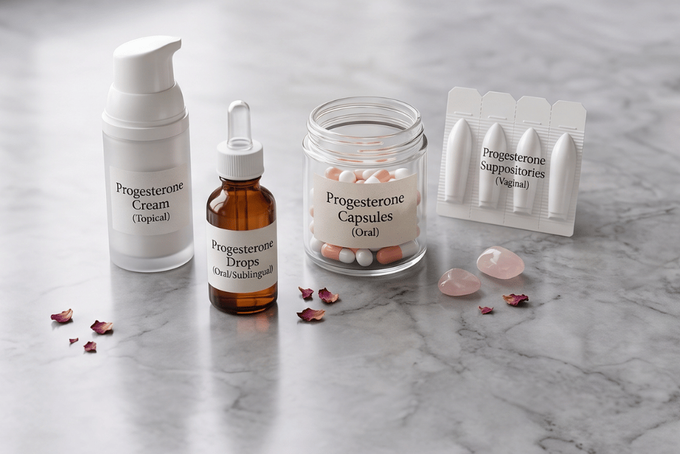
- Oral micronized progesterone (like Prometrium): convenient but heavily metabolized by the liver, meaning blood levels don't always reflect tissue levels well
- Vaginal progesterone: suppositories, gels, or creams; delivers progesterone more directly to uterine tissue and is often the most preferred method for pregnancy sustenance
- Sublingual progesterone: dissolves under the tongue, bypassing first-pass liver metabolism
- Topical progesterone creams: low doses are available OTC; absorption can be variable but offers mess-free convenience
Many women are prescribed progesterone and handed a calendar date to start, such as "begin on day 15" or "start 3 days after ovulation." And then they're left with pages of questions and no one to call. If this has been your experience, I want you to know: your confusion is completely valid, and it's not a reflection of you. This is a gap in how progesterone is routinely prescribed.
The most important thing you can do before starting supplementation is understand why you're taking it and what it's meant to accomplish — so that you're an informed participant in your own care, not just a passive recipient of a prescription.
How to Correctly Time Your Treatment for Luteal Phase Support
Timing is everything. And this is where a critical — and surprisingly common — mistake happens.
Starting progesterone too early can suppress or delay ovulation.
Here's why:
- Progesterone is the dominant hormone of the luteal phase. It is the hormonal signal that tells your body ovulation has occurred.
- If you introduce exogenous progesterone before your body has ovulated on its own, you can interfere with the natural LH surge, suppress the ovulatory signal, and push your cycle into a false luteal-phase pattern.
- Essentially, you've tricked your body into thinking ovulation happened when it hasn't.
This is why basing your start date on a fixed calendar day (like "day 14") or relying on a period-tracker app's predicted ovulation date is genuinely risky. Apps predict ovulation based on averages and historical patterns; they do not detect whether you have ovulated in *this* cycle.
How to Confirm Ovulation Has Actually Occurred
Before starting progesterone supplementation, you need true biological evidence of ovulation—not just a period-tracker app prediction or an arbitrary calendar date.
To confirm that an egg has actually been released, look for these three primary body markers:
1. Basal Body Temperature (BBT) Shift
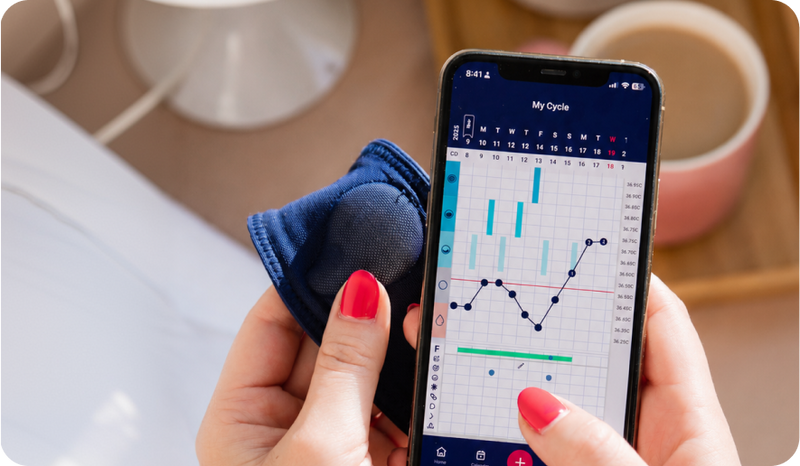
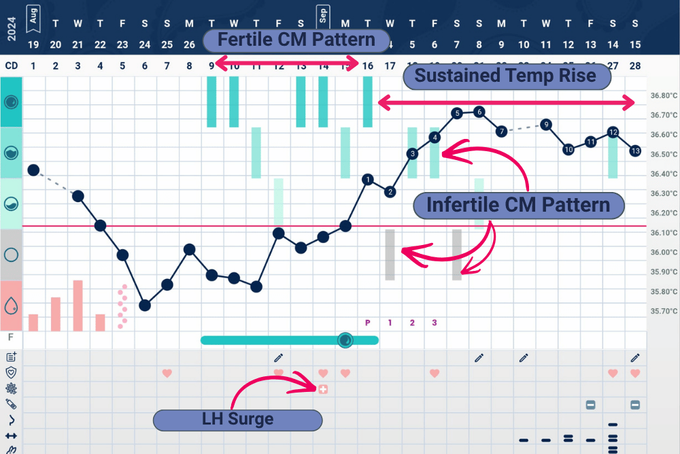
After ovulation, progesterone naturally causes a sustained rise in your resting body temperature — typically 0.3–0.5°F above your pre-ovulatory baseline. This shift should be confirmed over at least three consecutive mornings before you consider starting progesterone supplementation. A single elevated temp is not enough; you're looking for a sustained, stable shift.
2. Cervical Mucus Pattern
In the days leading up to ovulation, cervical mucus typically becomes clear, stretchy, and slippery, often described as egg-white consistency. After ovulation, progesterone causes the mucus to become cloudy, sticky, or essentially disappear (a "drying" pattern). If you've observed this shift and it's confirmed by a temperature rise, that's a strong biological signal that ovulation has occurred.
3. LH Surge Confirmation
A positive ovulation predictor kit (OPK) detects the LH surge, which typically precedes ovulation by 24–36 hours. However, a positive OPK alone doesn't confirm that ovulation actually happened — it confirms that an LH surge occurred. Pairing OPK results with BBT charting gives you more confidence.
The Golden Rule of Timing:
- Do not start progesterone on a fixed calendar day (e.g., "Day 14")
- Do not start supplementation based on a period-tracker app prediction alone. Apps calculate based on historical averages and cannot detect whether you ovulated in this specific cycle. Always wait for biological confirmation, such as a confirmed BBT shift.
When to Start and Stop Progesterone Luteal Support
Once you've confirmed ovulation, here's a general framework for timing:
When to Start:
Most protocols recommend starting progesterone 1–3 days after confirmed ovulation (i.e., after your BBT rise is established). This allows your body's natural LH surge to complete its job of triggering ovulation before the exogenous hormone enters the picture. Some practitioners prefer to start the day after the confirmed temperature shift; others wait two to three days. Discuss the specific timing with your provider, because it should be personalized to your cycle and your situation.
In general, if you are actively trying to conceive, it is ideal to wait until you are 3 days post-ovulation before starting progesterone. Starting supplementation too early can disrupt ovulation, so waiting helps ensure ovulation has occurred before luteal support begins. Many doctors miss this critical component and effectively have women on birth control for years instead of supporting conception.
Through the Two-Week Wait:
You continue progesterone daily through your luteal phase — generally 12–14 days — as you wait to find out if the cycle resulted in pregnancy. This is a two-week stretch that can feel emotionally endless. Your body is holding the uterine lining in place, and the progesterone you're taking is actively supporting that process.
Testing for Pregnancy Before Stopping:
Before you stop progesterone, take a pregnancy test. This is critical. If you've conceived and you stop progesterone abruptly without knowing you're pregnant, the drop in progesterone can trigger withdrawal bleeding — and that is the last thing you want. A home pregnancy test should be taken at the end of your luteal phase, about 3 days after your period would normally be expected. Yes, this skews your period length so I’m not a proponent of starting progesterone till you’ve addressed all the underlying root causes and are likely to conceive.
- If the test is negative, you can safely stop progesterone. Expect that your period will arrive a few days after you stop — not immediately. Because progesterone holds the uterine lining in place, it typically takes two to four days after stopping for progesterone levels to drop enough to trigger menstruation. This is completely normal. A period that's a few days "late" after stopping supplementation is not a reason to panic — it is your body naturally resetting.
- If the test is positive, do not stop progesterone. Contact your provider immediately so they can guide your next steps. Many practitioners continue progesterone supplementation through 10–12 weeks of pregnancy, until the placenta takes over progesterone production on its own.
The Delayed Bleed: What's Actually Happening
One of the most common sources of panic I hear about: "I stopped progesterone three days ago, and I haven't gotten my period. Am I pregnant?"
Maybe. Take a pregnancy test (or re-take it if you already took one before stopping). But if the test is negative, understand that the delay is physiological, not mysterious. Progesterone suppresses the hormonal cascade that leads to menstruation. Once you stop, it takes time for your circulating progesterone level to fall low enough that your body initiates the shedding process. Anywhere from two to four days after stopping is completely expected and normal (can be longer in some cases).
A Final Word on Root Causes
Progesterone supplementation can absolutely be part of a thoughtful, integrated fertility protocol. But it should never be the only thing you're doing — and it should never be a substitute for understanding why your progesterone is low in the first place.
The root causes are real, and addressing them prior to conception will significantly improve the chances of conception and a healthy pregnancy:
Egg quality is the foundation.
A 90-day egg quality protocol addressing antioxidant status, mitochondrial function, and micronutrient support can shift your luteal phase meaningfully. You can download my Egg Quality Blueprint for more details.
Gut health affects hormones more than most people realize. If your gut is inflamed or dysbiotic, bacterial endotoxins can impair progesterone production directly.
Autoimmune activity — especially thyroid autoimmunity — may be quietly undermining your follicular development and corpus luteum function.
Adrenal health and stress are inseparable from reproductive hormone balance. If cortisol is chronically elevated, progesterone is one of the first casualties.
Remember, you deserve a provider who is asking all of these questions alongside you. Progesterone is a conversation starter, not a conclusion. Let it be the beginning of a deeper investigation into what your body actually needs — so that when you conceive, your foundation is strong enough to sustain a healthy pregnancy.
If you want to know more about your potential root causes, go to madrefertility.com for a free 15-minute assessment to discover the exact obstacles in the way of your fertility.
References
1. Tremellen K, Syedi N, Tan S, Pearce K. Metabolic endotoxaemia – a potential novel link between ovarian inflammation and impaired progesterone production. *Gynecological Endocrinology.* 2015. (https://doi.org/10.3109/09513590.2014.994602)
2. Seekford ZK, et al. Exposure of Bovine Granulosa Cells to Lipopolysaccharide Reduces Progesterone Secretion During Luteinization. *Biology of Reproduction.* 2025. [https://doi.org/10.1093/biolre/ioaf055](https://doi.org/10.1093/biolre/ioaf055)
3. Franchi AM, et al. Progesterone Is Essential for Protecting Against LPS-Induced Pregnancy Loss. *PLOS ONE.* 2013. (https://doi.org/10.1371/journal.pone.0056161)
4. Jiang AK, et al. Gut Bacteria Encode Reductases that Biotransform Steroid Hormones. *bioRxiv.* 2024. (https://doi.org/10.1101/2024.10.04.616736)
5. Mancebo A, et al. Metabolomic analysis of follicular fluid from women with Hashimoto thyroiditis. *Scientific Reports.* 2023. (https://doi.org/10.1038/s41598-023-39514-7)
6. Gzgzyan A, et al. Impact of Antithyroperoxidase Antibodies (Anti-TPO) on Ovarian Reserve and Early Embryo Development in ART Cycles. *International Journal of Molecular Sciences.* 2023. (https://doi.org/10.3390/ijms24054705)
7. Notaro AGL, et al. Evaluation of ovarian reserve in women with thyroid autoimmunity. *JBRA Assisted Reproduction.* 2024. (https://doi.org/10.5935/1518-0557.20240032)
8. Chen X, et al. Serum steroid hormone profiles in reproductive-age women with SLE. *Frontiers in Immunology.* 2026. (https://doi.org/10.3389/fimmu.2026.1755060)
9. Desai MK, Brinton RD. Autoimmune Disease in Women: Endocrine Transition and Risk Across the Lifespan. *Frontiers in Endocrinology.* 2019. (https://doi.org/10.3389/fendo.2019.00265)
10. Torpy DJ, Chrousos GP, Gold PW. Interactions between the Hypothalamic-Pituitary-Adrenal Axis and the Female Reproductive System. *Annals of Internal Medicine.* 1998. (https://doi.org/10.7326/0003-4819-129-3-199808010-00012)
11. Breen KM, et al. Corticosterone Blocks Ovarian Cyclicity and the LH Surge via Decreased Kisspeptin Neuron Activation. *Endocrinology.* 2016. (https://doi.org/10.1210/en.2015-1711)
12. Wdowiak A, et al. Interactions of Cortisol and Prolactin with Other Selected Menstrual Cycle Hormones Affecting the Chances of Conception in Infertile Women. *International Journal of Environmental Research and Public Health.* 2020. (https://doi.org/10.3390/ijerph17207537)
13. Joseph DN, Whirledge S. Stress and the HPA Axis: Balancing Homeostasis and Fertility. *International Journal of Molecular Sciences.* 2017. (https://doi.org/10.3390/ijms18102224)