
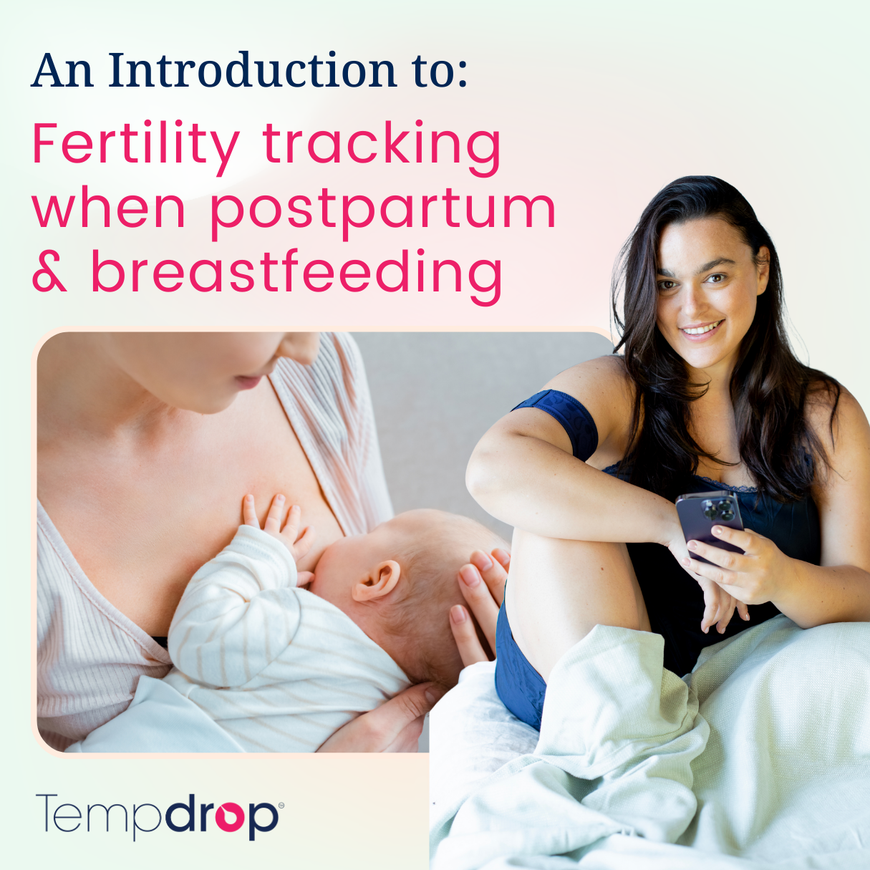

This article originally appeared on NaturalWomanhood.org, a non-profit dedicated to the promotion of fertility charting. We are proud to share their foundational expertise on the biology of postpartum health.
For many women, Fertility Awareness Based Methods (FABM) are remarkable at making our bodies’ cycles much less mysterious and much more understandable. This is no less true than for the postpartum period—yes, even that period after giving birth when hormones are all over the place. Whether you’re charting or not, this can be a confusing time for many women who are hoping to have some space between the new baby and the next one (or not have any more!). The good news is there are methods available for women who are breastfeeding.
While the biology of breastfeeding as a form of birth control is sound*, the modern reality of "on-demand" parenting often makes traditional charting difficult. Between night feedings and erratic wake-up times, capturing an accurate basal body temperature (BBT) can feel nearly impossible when you are sleep-deprived. This is where technology meets biology. Wearable sensors like Tempdrop have become a postpartum favorite because they remove the stress of perfect sleep requirements, helping you identify your return to fertility with confidence.
>>>Read our deep dive into common postpartum charting questions.
*Breastfeeding as a form of birth control can be used when specific protocols are followed. You can read more about Lactational Amenhorrea Method (LAM) and Ecological Breastfeeding on our website.
Right after labor and delivery, the birth of the placenta and baby results in a dramatic shift in a mom’s hormonal makeup. It is safe to assume that the two weeks following birth a woman will not ovulate—nursing or not (although intercourse is likely far off the list of priorities at this point!). In addition, there's a lot of healing going on - the uterus contracting to a non-pregnancy size, healing where the placenta was, etc.
But what happens with a woman’s fertility cycle after those first two weeks postpartum is unique for every woman based on her environmental factors, hormonal constitution, and even her baby’s feeding habits. Once ovulation hormones start activating, many women find their cycles to be irregular, long, difficult to chart, and particularly hard to define which days are fertile vs. not. So let’s clear up some of this, shall we?

Lactational Amenorrhea Method (LAM)
The idea that breastfeeding prevents pregnancy is actually based on the sound science of how lactation affects reproductive hormones. Prolactin wants to be the dominant hormone when breastfeeding - you can even break it down to pro-lactation. Nursing results in prolactin. Therefore, technically speaking, breastfeeding makes you infertile if you have enough prolactin. This is where the idea of the Lactational Amenorrhea Method (LAM) comes from. According to LAM, you can consider yourself infertile if:
-
Your baby is younger than 6 months old.
-
You have not had a period yet.
-
Your baby has not received supplemental food (formula or solids), or artificial nipples (bottles or pacifiers).
Item #2 to me is always a bit of a head scratcher—seems the qualification itself disputes the method, but let’s run with it for now.
What complicates things is when women follow mainstream advice on breastfeeding that neutralizes the power nursing hormones have to suppress ovulation. For instance, many women believe the pump produces the same hormonal effect as a baby sucking, but it actually is quite different. A pump works on suction rather than suckling and fails to provide the same stimulation on the nipple as a baby’s latch; as a result, it does not produce as much prolactin. That’s very important to know!
Ecological Breastfeeding
There is also something called ecological breastfeeding (EBF) that extends the period of non-ovulation past the first 6 months and has more rigorous stipulations. This includes co-sleeping, on-demand nursing, limited (if any) separation between mother and baby, and still no pumps, bottles, or pacifiers.
Note: The Fertility Appreciation Collaborative to Teach the Science (FACTS) notes that while EBF is a form of fertility awareness method for avoiding pregnancy, it is not one with sufficient current research of effectiveness for them to consider it evidence-based.
Still, many women swear by it, while other mothers find meeting all the standards darn well impossible, particularly moms who work outside the home or even just have other responsibilities. In our culture today (i.e. not living in a village with people offering helping hands left and right), it can be very hard for moms to feel sustained without significant exhaustion. Even still—some moms doggedly follow all the rules to a tee, and "Aunt Flo" decides to show up anyway. This reminds us the priority of charting biomarkers when it comes to recognizing fertile periods.

Charting with other Fertility Awareness Based Methods
The good news is that our biomarkers give us a pretty good window into what’s going on with our hormones. For moms trying to recognize fertile and infertile periods of time for any reason, it’s important to choose a fertility awareness method and pay attention to these biomarkers.
LAM and EBF can be used in conjunction with charting, whichever fertility awareness-based method a mom decides on. Some methods have a specific postpartum protocol included, and I’d recommend a mother choose one method and stick to it. The most important factor is to work with a qualified instructor - almost always, that means certified.
The postpartum period is a transitional time difficult for even the most seasoned charter. Your instructor should help you find which biomarkers you want to prioritize for this particular moment. Because what you need this month might be different than last month. And heaven knows what will be helpful next month.
Thankfully, technology is advancing and there are more options than ever for making charting as seamless as possible. Wearables like Tempdrop make temping easy for the mom who has unusual (and sporadic) sleep patterns. With the help of tools like Tempdrop, an instructor can help piece together what’s working (or not) for a postpartum mom in deciphering fertile and infertile days.

An example of a Tempdrop chart showing nightly BBT readings, cervical mucus and confirmed ovulation
Lastly, patience is a new mom’s best asset. It really is a season. Those cycles will get back on track, they just need time. It can take up to 6 cycles for hormones to regulate. If after 6 cycles, cycles are still irregular and difficult to decipher, it’s worth looking more in depth at hormonal levels.
So does breastfeeding help to prevent ovulation? Yes, it definitely can. Should new moms still be recording and paying attention to biomarkers like cervical fluid that tell them about their fertility? Yes. But since every woman’s experience can be so different, charting biomarkers always comes first and will be most reliable, no matter what your intentions are!
Oh, and kick back, don’t forget to enjoy your new bundle of life!
Common Questions: Breastfeeding & Fertility Tracking
Does pumping count as exclusive breastfeeding for LAM?
No. Clinical protocols for LAM define "exclusive breastfeeding" as direct nursing at the breast. While pumping provides breast milk, it may not provide the consistent nipple stimulation required to reliably suppress the hormones that prevent ovulation. Pumping or using a pacifier can decrease the effectiveness of LAM. To stay protected, it’s best to add a backup tracking method to identify when your fertility returns.
Can I use the Symptothermal Method while nursing?
Yes, but it requires adaptation. Because breastfeeding can cause long periods of "hormonal stalling" and delayed ovulation, you may see many days of "dry" or "non-peak" readings. Using a wearable sensor like Tempdrop is the most effective way to use the Symptothermal Method postpartum, as it filters out the temperature disturbances caused by night wakings.
What is the 'Return of Fertility' (ROF) window?
The ROF window is the period when your body transitions from hormonal suppression back to cycling. This window is unique to every woman and circumstance; for some, it occurs as early 4-6 weeks postpartum, while for others, it may take 18+ months, especially if they are breastfeeding regularly. Tracking your Basal Body Temperature (BBT) is the only way to confirm your first ovulation before your first postpartum period arrives.
Does prolactin affect my basal body temperature?
Prolactin itself does not significantly change your baseline temperature, but it suppresses the hormone progesterone that causes the body’s change in temperature (the thermal shift to confirm ovulation) While you are exclusively breastfeeding, your BBT will likely remain in a consistently low range. Once you see a sustained temperature rise, it is a clear signal that your body has successfully ovulated despite high prolactin levels.
How do I tell the difference between postpartum discharge and cervical mucus?
True postpartum recovery discharge (lochia) typically ends by 8 weeks after birth. After that, your hormones may create a daily baseline, officially known as a Basic Infertile Pattern (BIP). This is a pattern of discharge—or a sensation of dryness—that feels exactly the same every single day (often described as "dry," "sticky," or "gummy").
To identify returning fertility, you are looking for a clear shift away from that BIP. If your discharge suddenly becomes clearer, wet, or slippery, it is a sign that your body is attempting to ovulate and your fertile window is opening. If you are new to FAM charting, it may be helpful to work with a clinician or instructor to identify a BIP and opening/closing of the fertile window during this time.
Lastly, patience is a new mom’s best asset. It really is a season. Those cycles will get back on track, they just need time. It can take up to 6 cycles for hormones to regulate. If after 6 cycles, cycles are still irregular and difficult to decipher, it’s worth looking more in depth at hormonal levels.
So does breastfeeding help to prevent ovulation? Yes, it definitely can. Should new moms still be recording and paying attention to biomarkers like cervical fluid that tell them about their fertility? Yes. But since every woman’s experience can be so different, charting biomarkers always comes first and will be most reliable, no matter what your intentions are!
