Worry Less: See Real Pregnant vs. Not Pregnant Basal Body Temperature Charts
Confused by your temperatures? See real pregnant vs. not pregnant basal body temperature charts side-by-side in this article.




Updated March 30, 2026

If you’re trying to get pregnant, you’ll know the Two Week Wait (2WW) all too well. That stretch between your fertile window and when your period is due can feel like an eternity. If you track your basal body temperature (BBT), it’s very common to find yourself analyzing your chart with a fine-tooth comb, wondering if every little temperature shift, rise, or dip could be an early indicator of pregnancy (or not).
While it is always best to take a pregnancy test (urine or blood) as it is the only way to know with certainty whether you are pregnant, your BBT chart can help offer clues. If you know what you’re looking for, using the basal body temperature method can provide early insight into a possible pregnancy.
In this article, we’ll break down the patterns you may see during the notorious 2WW so you can understand pregnant vs not pregnant examples of BBT charts. Once you understand the biology driving changes in your body, you might even find yourself nerding out… in a good way.
A Quick Refresher: How to Track BBT and Fertility
If you are a first-time reader, your basal body temperature (BBT) is your body's lowest resting temperature. To take your basal body temperature accurately, you must use a highly sensitive basal thermometer and record your temperature at the same time every morning.
A healthy menstrual cycle follows a biphasic pattern driven by hormones:
- Before Ovulation: Estrogen keeps your basal temperature lower.
- After Ovulation: The body produces progesterone, which turns the heat up and causes a noticeable temperature rise.
When you measure your BBT and notice a sustained increase in temperature, it confirms ovulation. Now, how do we use this luteal phase data to detect early pregnancy?
The Basics of a BBT Chart: Track BBT and Fertility
Before we talk about pregnancy symptoms and early pregnancy signs, it’s important to understand what actually affects your BBT throughout your menstrual cycle.
A healthy menstrual cycle follows a biphasic pattern. This simply means you’ll see one steady pattern of lower resting temperature before ovulation, followed by a noticeable step-up afterwards. These shifts are driven by hormonal changes. When you take your basal body temperature, you are tracking the lowest resting temperature of your body.
In the first half of your cycle, estrogen is the dominant hormone. Think of estrogen as the cooling hormone—it keeps temperatures lower before ovulation. After ovulation, the follicle that released the egg becomes the corpus luteum, which produces progesterone for the luteal phase.
Progesterone turns the heat up. It causes the body to experience an increase in temperature. It’s responsible for the higher temperatures you see after ovulation and those high luteal phase temperatures.
So how do we use this information when you measure your BBT during the Two Week Wait?
What a "Not Pregnant" Chart Looks Like
In a cycle where you’re not pregnant, your temperature remains elevated after ovulation and then you will notice a temperature drop as the period approaches. This is often called the pre-menstrual drop.
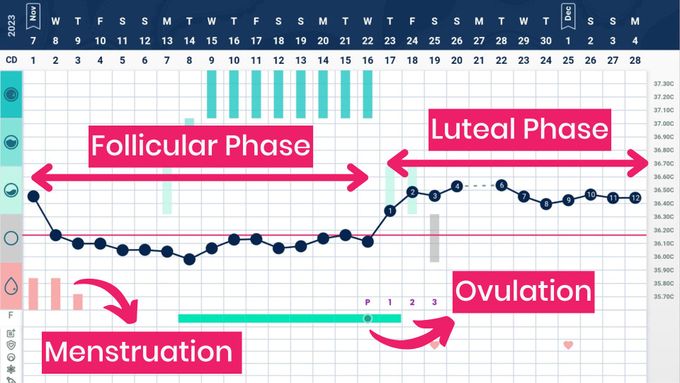
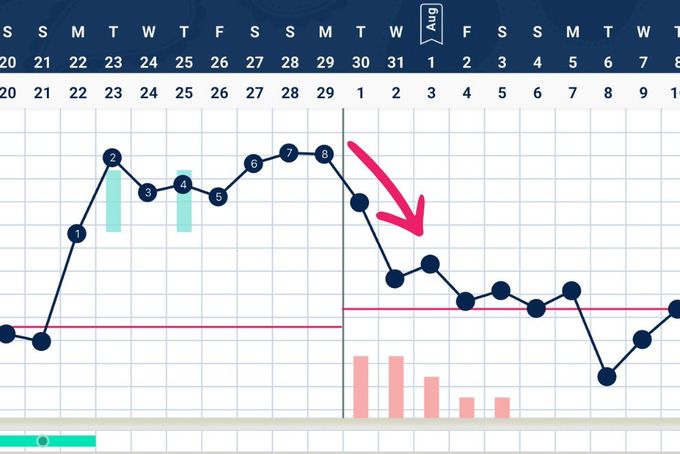
It’s important to know that this drop in temperature doesn’t always happen the day before bleeding starts. For some, temperatures fall a day or two earlier or may not drop until after the bleeding has already begun. The key to remember is that the temperature will drop during menstruation, signaling the start of a new cycle.
This happens because progesterone levels fall when the egg isn’t fertilized. Progesterone is what makes your BBT stay high after ovulation, so when it drops, your basal temperature drops too, and the uterine lining sheds.
No pregnancy → progesterone falls → temperature drops → period begins
What a "Pregnant" Chart Looks Like
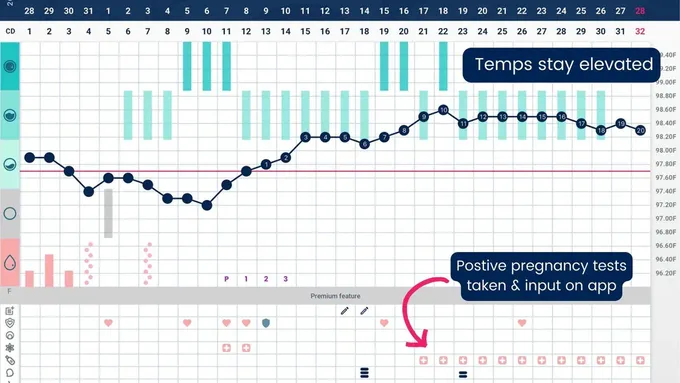
There are a few key patterns people using natural family planning and BBT tracking look for when wondering whether a cycle was successful, particularly to detect pregnancy early and avoid false negative results. If you take your BBT every morning at the same time, you may be pregnant if you spot these trends.
The 18-Day Rule
One of the most well-known guidelines in charting is the 18-Day Rule. If ovulation has been confirmed and your temperatures stay high throughout the luteal phase for 18 days post-ovulation, this is clinically considered consistent with pregnancy. When your BBT rises and stays high, you have a strong chance of being pregnant.
That said, many will agree, waiting that long before it's time to take a pregnancy test can feel like a very big ask.
Triphasic Pattern and the Basal Body Temperature Method
Earlier, we talked about a biphasic pattern. A pattern that often gets attention in early pregnancy symptoms discussions is the triphasic pattern.
A triphasic chart shows a second temperature rise, creating a third level. This increase in BBT sometimes appears around 7–10 days post-ovulation. It’s often suggested that this happens due to sustained progesterone production later in the luteal phase, where the temperature rises slightly again.
Large datasets show that only around 12% of pregnant BBT charts display a triphasic pattern. So, if you don’t see your BBT do this, it doesn’t mean you aren’t pregnant.
The Implantation Dip: High Basal Temperature vs Dip
Let’s talk about the notorious implantation dip. An implantation dip is described as a one-day drop that occurs around 7 days after ovulation.
After ovulation, progesterone ensures your BBT stays high. Some suggest that around the time implantation occurs, there may be a brief rise in estrogen. Because estrogen has a cooling effect, this temporary shift could cause a one-day dip.
Here’s the catch: mid-luteal estrogen rises also happen in non-pregnant cycles. There’s no evidence that this rise is triggered by implantation. An implantation dip has not been scientifically proven as a definitive early indicator of pregnancy. A single low temperature can happen in any cycle.
Overall, a long and sustained rise in temperature is a really good thing. Not only could it mean you're pregnant, but it also indicates that progesterone is being produced well.
Feature | Typical (Not Pregnant) Cycle | Pregnancy Chart |
Post-ovulation temps | Rise after ovulation | Rise after ovulation |
Luteal phase temps | Drop before, or during period | Stay elevated (18 high temperatures) |
Pre-menstrual drop | Common | Usually absent |
18 high temperatures after ovulation | No | Yes |
Triphasic pattern | Sometimes | Sometimes (not guaranteed) |
Take Your Basal Body Temperature: Method Accuracy
If you’re using a standard basal thermometer, temperature tracking can be surprisingly easy to throw off. Inconsistent wake times, broken sleep, or illness can all affect your readings. When you measure BBT and temperatures bounce around, it can make it harder to confirm ovulation.
This is where a wearable tracker like Tempdrop can make a real difference.
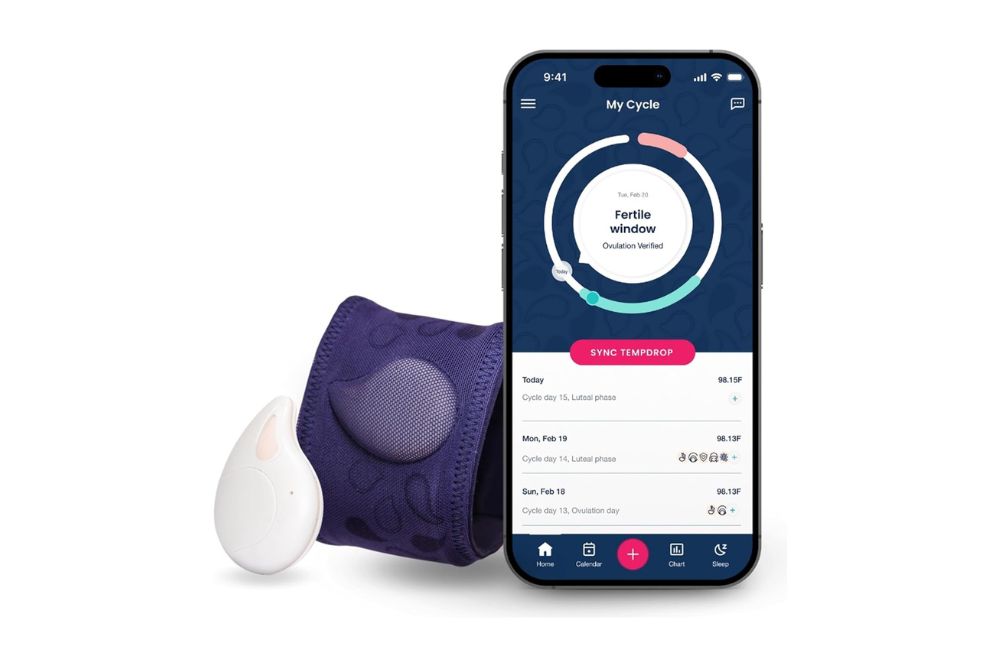
Tempdrop is a wearable device that collects data overnight. It helps take the noise out of tracking so you can record your temperature accurately and use a basal body temperature chart with confidence. If you start taking your basal body temperature with a reliable tracker, you are more likely to get pregnant by accurately pinpointing your fertile window.
Keep track of your BBT and don't guess with a messy chart. You can read more about the clinical evidence supporting Tempdrop here: Tempdrop Clinical Evidence.
Need More Support? Conceive with Confidence
We know that navigating the journey to get pregnant can be an emotional and overwhelming experience. Between learning how to use a basal body temperature chart, timing intercourse, and looking out for early pregnancy symptoms, it is a lot to handle on your own.
If you are trying to get pregnant and want expert guidance to remove the guesswork, check out Tempdrop's Conceive with Confidence program. This comprehensive bundle is designed to empower you with the exact knowledge, tools, and support you need to maximize your chances of getting pregnant naturally.