Can You Get Pregnant On Your Period? Everything You Need to Know


Updated February 12, 2026
Do you ever find yourself wondering if it is possible to get pregnant if you have sex while on your period? Or asking, "Am I fertile when I’m on my period?"
The simplest answer is yes—but it is unlikely.
For most women with regular cycles, their period falls well outside their fertile window. However, there are specific situations where pregnancy can still happen. If you are only tracking your bleeding and not your ovulation, it is easy to miss those windows where unprotected sex could lead to a baby.
In this article, we'll discuss the specific conditions under which getting pregnant during your period is possible and how to better understand your menstrual cycle.
Is It Possible to Get Pregnant If You Have Sex During Your Period?
Generally, the chance of getting pregnant during your period is low. However, biology isn't always like clockwork.
To become pregnant, a sperm must meet an egg. This usually happens when an egg is released from the ovary (ovulation) and travels down the fallopian tubes. If you have unprotected intercourse, sperm can survive in the reproductive tract (your uterus and tubes) for up to 5 days.
If your cycle is short or irregular, that 5-day survival window might overlap with the day you ovulate, meaning you could get pregnant from sex during your period.
Let’s break down the two most common scenarios where this happens.
Scenario 1: Getting Pregnant Right After Your Period Starts
Many women believe they are safe until the middle of their cycle (around day 14). But if you have a short menstrual cycle (e.g., 21 to 24 days), you might ovulate much earlier than average.
It's important to know:
- Sperm can live inside your reproductive tract for up to 5 days.
- Pregnancy happens if sperm are present when ovulation occurs.
- Unprotected sex near the end of your period can leave sperm waiting for an early egg.
Imagine this timeline:
- Cycle Day 1-5: You’re on your period.
- Cycle Day 4: You have intercourse.
- Cycle Day 8: You ovulate early.
Since sperm can survive from Day 4 through Day 9, one of those swimmers could potentially meet your egg. In this case, you didn't get pregnant while bleeding, but the sex right during your period led to conception.
This is more likely if you:
- Have short cycles (less than 24 days).
- Ovulate early in your cycle.
- Have longer periods (bleeding for three to seven days or more).
- Have irregular periods.
So, while getting pregnant on your period is rare, the risk of pregnancy is definitely not zero.
Let’s look at an example:
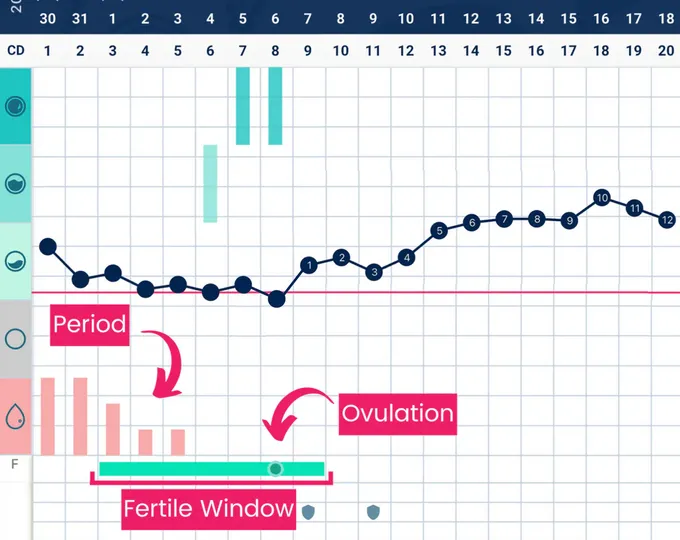
A chart showing the example mentioned above. A period and ovulation overlapping.
Scenario 2: Mistaking Intermenstrual Bleeding for Your Period
Sometimes, what looks like your period isn’t actually a period at all. It could be vaginal bleeding known as intermenstrual bleeding.
If you mistake this bleeding for the start of your period, you might think you are in a "safe" zone when you are actually right in your fertile window.
Common causes of non-period bleeding:
- Irregular bleeding: Hormonal shifts, stress, or coming off birth control pills can cause unexpected spotting.
Here’s an example of how this leads to pregnancy:
- Day 1: You think your period begins early, but it’s actually ovulation spotting or irregular bleeding
- Day 2: You have intercourse thinking you are safe.
- Day 3: You ovulate, and the egg is ready to meet the sperm that’s been hanging out for a few days
In this scenario, the sperm are perfectly timed to meet the egg in your fertile window. Pregnancy is very much possible!
How to Spot the Difference: Period vs. Spotting
If you’re trying to use natural family planning or just want to avoid unintended pregnancy, here are a few tips for distinguishing between true period bleeding and intermenstrual bleeding:
Timing
Mid-cycle bleeding is less likely to be a true period. If you get your period every 2 weeks or less one of these is very unlikely to be your actual period
Flow:
Period bleeding is usually heavier and lasts longer
Spotting is lighter and shorter
Color:
Spotting: might appear pinkish or brownish
Period: brighter red
And most importantly, remember that a true period always follows ovulation (usually around two weeks after ovulation).
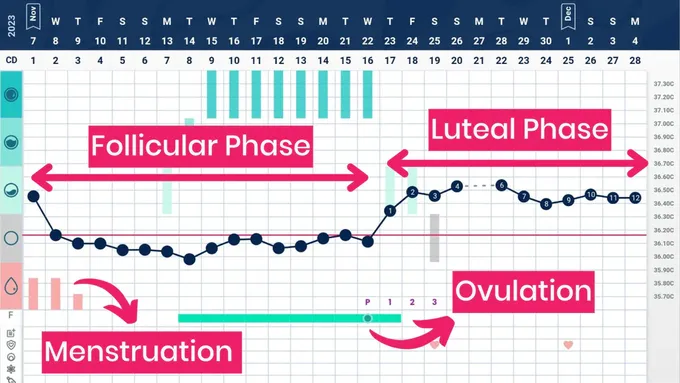
A chart example, tracking a cycle with Tempdrop. Chart shows a 3 day period and ovulation on day 16
The Best Way to Prevent Pregnancy: Track Ovulation, Not Just Bleeding
The real question isn't just "Can You Get Pregnant on Your Period?" It’s: When do I actually ovulate?
Because ovulation—not your period—is what determines fertility. If you only track bleeding or rely on the calendar method (guessing day 14), you’re guessing. If you track ovulation, you know.
Tracking your basal body temperature is one of the most reliable ways to confirm ovulation happens. By using a device like Tempdrop, you can clearly see when your fertile window opens and closes.
The Bottom Line on Period Sex and Pregnancy
So… can you be on your period and get pregnant?
Technically? Yes.
Common? No.
Possible under certain conditions? Absolutely.
Whether you are using birth control, practicing family planning, or just trying to understand your body, it’s important to recognize these nuances. Pregnancy during your period or from mistaken bleeding is rare but not impossible. Always consider the timing of intercourse and how it aligns with your unique menstrual cycle.
When in doubt, use a tracker to monitor your cervical mucus and temperature. This gives you peace of mind and helps you understand exactly when pregnancy is possible.
Cycle Clarity
Track your cycle with precision and gain deeper insights into your health.