Basal Body Temperature (BBT) 101: Mastering the Temperature Method for Health & Family Planning
What is Basal Body Temperature? Learn how the BBT method helps you track your menstrual cycle, spot fertile signs, and manage family planning accurately.
Updated March 11, 2026
What is Basal Body Temperature?
Basal body temperature (often called BBT) is your lowest temperature attained during rest. By tracking your basal body temperature, you can detect the thermal shift that happens after ovulation. It is a primary tool used in fertility awareness methods to identify the fertile window and monitor hormonal health.
Basal body temperature is more than just a number on a thermometer. It is one of the most vital signs of your reproductive and metabolic health.
Whether you are trying to conceive, looking for a hormone-free method of contraception*, or simply monitoring your menstrual cycle, your BBT chart tells a story that standard period tracking apps can’t. While a calendar app estimates your cycle based on averages, measuring your basal body temperature gives you real-time data about changes in your body. If you're interested in this type of natural family planning, tracking your BBT may be the right option for you!
*Note: Tempdrop is not approved for use as a contraceptive.
Why should I track my Basal Body Temperature?
Most people start tracking BBT to get pregnant or prevent pregnancy, but the insights go much deeper. Your body’s temperature measurement is a direct reflection of your metabolism and hormones.
- Confirming Ovulation: Observing when your body temperature rises is the only way to confirm ovulation has occurred at home. While cervical mucus can predict that ovulation is approaching, the temperature shift confirms it was successful.
- Natural Family Planning: As a family planning method, BBT helps you identify when ovulation happens. When you track your temperature each day, you can effectively measure your BBT to time intercourse.
Health & Metabolism: Your resting temperature is regulated by your thyroid and metabolism. When you're tracking your BBT, those daily basal body temperature readings can reveal underlying issues like hypothyroidism*, luteal phase deficiency, and other hormonal imbalances before other symptoms appear.
*Note: Tempdrop cannot be used for detecting thyroid issues.
How do I capture an accurate Basal Body Temperature?
Your basal body temperature (BBT) is your body's lowest resting temperature, typically reached during deep sleep. With BBT tracking, accuracy is everything. Unlike your "daytime" temperature, which fluctuates when you move, eat, or stress, your basal temperature is your true baseline.
Capturing this data requires the right tool. You cannot use a standard fever thermometer; you need a device sensitive enough to detect minute shifts. If you are unsure which tool fits your lifestyle—from simple oral sticks to advanced wearables—you can explore our breakdown of the best BBT thermometers to track fertility.
Traditionally, using a manual basal thermometer required you to measure temperature at the same time each day, before you even get out of bed. This strict timing for taking your temperature every morning can be stressful and error-prone!
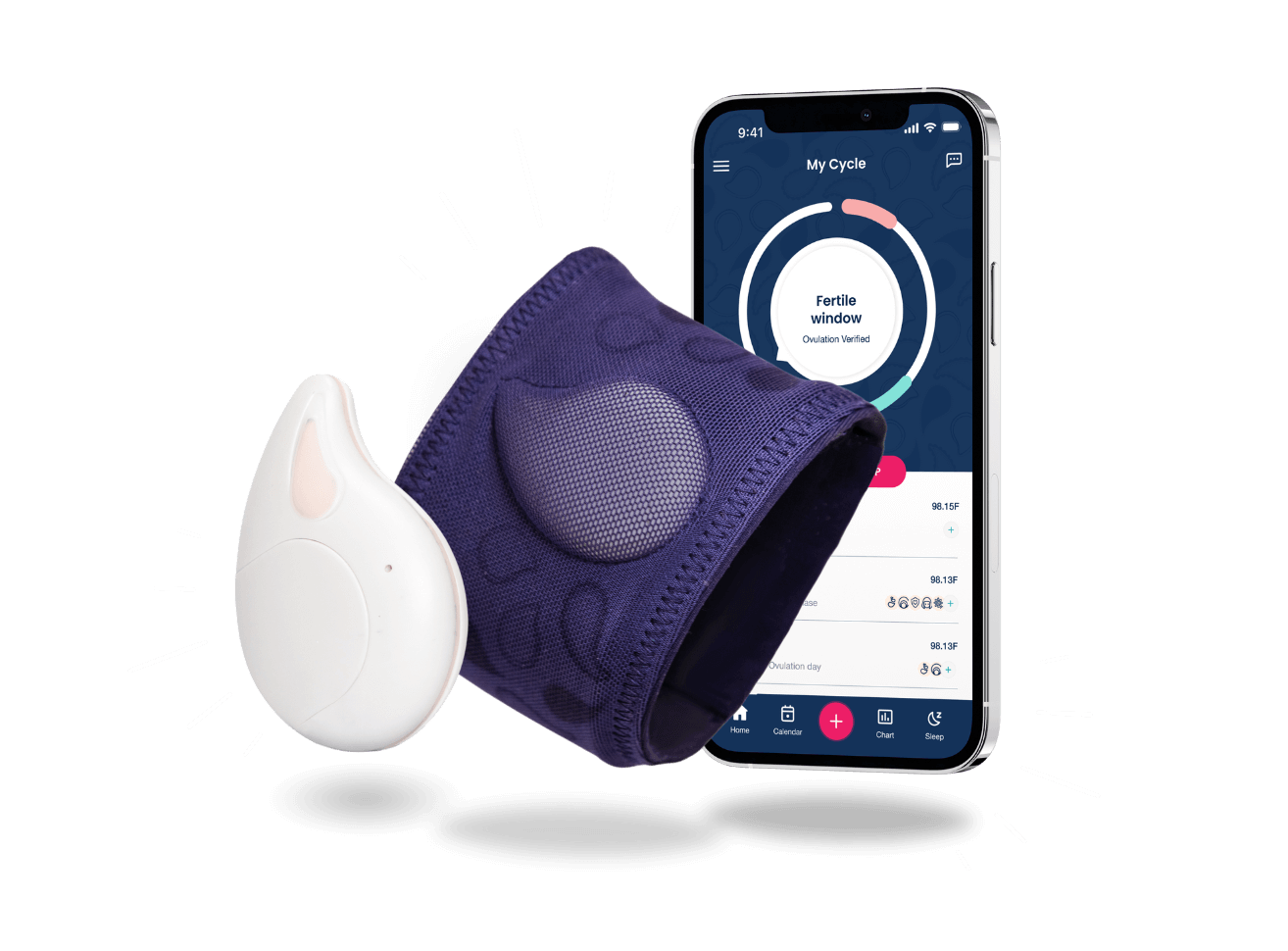
This is why many women who chart their cycles have switched to Tempdrop. By continuously monitoring your body’s temperature while you sleep, Tempdrop’s algorithm filters out disturbances to derive your true resting body temperature. With Tempdrop, you can take your basal body temperature without the stress of having to log your temperature as soon as you wake up.
How to Measure BBT (Manual vs. Wearable)
To effectively use BBT for fertility tracking, consistency is key. Because the thermal shift after ovulation is very subtle (often just 0.5°F to 1.0°F), you need to minimize variables that affect basal body temperature.
Do I need a special thermometer for BBT?
Yes, when you're using the BBT method, you cannot use the standard fever thermometer sitting in your medicine cabinet. You must buy a basal thermometer that measures to two decimal places (e.g. 97.56°F).
A regular thermometer that rounds to one decimal point (97.6°F) is not sensitive enough to detect the minute temperature changes required for precise basal body temperature charting.
What are the rules for taking basal body temperature?
If you choose a traditional oral or vaginal BBT thermometer, you must follow "The Golden Rules" strictly for the data to be valid. If you don't, your charts may look erratic, making it hard to confirm when ovulation has occurred.
- Timing: You must measure BBT around the same time every single day (e.g., 6:30 AM). A variance of more than 60 minutes can skew your data.
- Rest: Many women find they need at least 3-4 consecutive hours of sleep before they take their temperature.
- Stillness: You must take your measurement as soon as you wake up. Do this before you get out of bed, sit up, drink water, or speak. Any physical activity causes your body temperature to increase, masking your true resting temperature.
Can I track BBT with irregular sleep or shift work?
For many women, especially those with young children, on shift work, or who have insomnia, following these strict rules is impossible. If measuring your basal body temperature manually is causing stress or leading to messy charts, a wearable sensor like Tempdrop is often the better option to determine your fertility status.
Because the sensor tracks you continuously while you sleep, you don't have to worry about waking up at the same time or getting perfectly uninterrupted sleep. In fact, new clinical evidence supports Tempdrop for precise ovulation detection, validating it as a reliable alternative to traditional oral tracking.
Consistent BBT, Wherever You Are
Tempdrop adjusts to your routine for consistent BBT tracking.
Reading Your Chart: Ovulation & The Cycle
Once you begin tracking your BBT, you won't look at individual daily readings in isolation. Instead, you are looking for the overall pattern that emerges over the month. When measuring your basal body temperature, your cycle is divided into two distinct phases based on how your temperature varies.
What does a normal BBT chart look like?
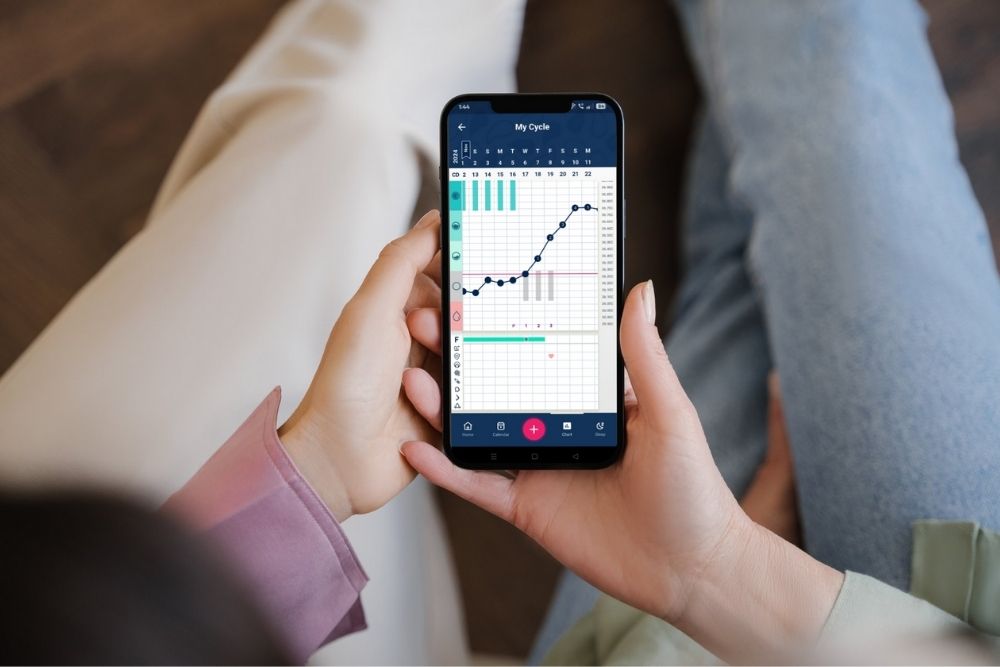
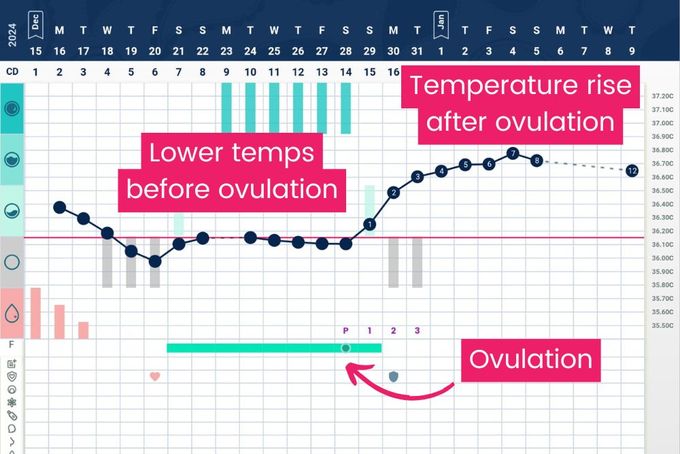
A healthy ovulatory chart is "biphasic," meaning it has two distinct temperature levels.
- The Follicular Phase (Low): This begins on the first day of your period. During this time, estrogen is the dominant hormone, which keeps your resting temperature lower.
- The Luteal Phase (High): After ovulation, progesterone takes over. This hormone acts as a heater, causing your body temperature to increase and stay high until your next period (typically 10–14 days later).
How do I identify ovulation on my chart?
The most critical moment in BBT charts is the "Thermal Shift." This is the visual confirmation that ovulation has occurred.
To find it, you look for a sustained rise. A general rule of thumb (often used in fertility awareness methods) is to identify three consecutive temperatures that are at least 0.2°F (0.05-0.1°C) higher than the previous six temperatures. This temperature increase confirms that the egg has been released and the fertile window is closing. Here’s more information on how to read your Tempdrop chart.
Should I track cervical mucus with BBT?
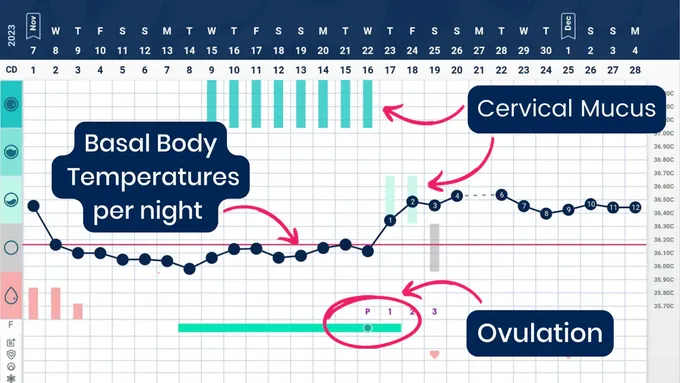
Yes. While BBT measurements are excellent for the detection of ovulation, they are retrospective—they tell you ovulation just happened. If you are trying to conceive, waiting for the temp rise means you might miss your chance.
This is why cervical mucus is often used in combination with other fertility signs. Here's more information on how to observe and chart your cervical mucus with Tempdrop.
- Cervical Mucus (CM): Tells you ovulation is approaching (High Fertility).
- Basal Body Temperature: Confirms ovulation is passed (End of Fertility).
By using the temperature method alongside mucus observations, you get a complete picture of your fertility status.
Can BBT help with natural family planning?
Yes, when used as part of a fertility awareness-based method (we recommend you choose a Symptothermal Method). The goal is to identify the "safe" window where conception is highly unlikely.
You are generally considered potentially fertile from the opening of your fertile window (which varies by individual) until ovulation is confirmed. In established methods, once you see the thermal shift—where your temperature remains elevated for at least three consecutive days, along with an abrupt dry up of cervical mucus—the egg is released and gone. Following this confirmation, practitioners of natural family planning consider the post-ovulatory phase "safe" until the next period. To prevent pregnancy, users typically abstain or use a barrier form of birth control during the fertile window.
Important Note: This method requires strict adherence to specific rules. Using NFP for contraception is a learned skill. It is highly recommended to learn a formal method with a certified instructor. Tempdrop is NOT approved as a method of birth control, but can be used as a tool alongside a formal fertility awareness method.
How do I use basal body temperature charting to get pregnant or when trying to conceive (TTC)?
If you are trying to conceive, your goal is to have intercourse before the temperature increases. Remember, once the temperature rises, ovulation is usually over, and the window of opportunity has closed.
Tracking BBT helps you understand your cycle history, but for the best timing, you should pair it with Cervical Mucus observations. Since ovulation days can shift from month to month, monitoring for cervical mucus alerts you to your fertile window in real-time. This allows you to time intimacy perfectly during the days leading up to ovulation.
Does basal body temperature indicate pregnancy?
One of the most common questions is: "Does basal body temperature stay high throughout pregnancy?"
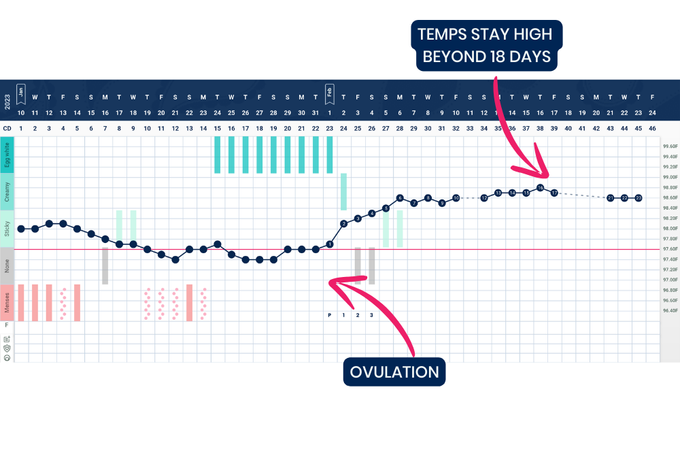
Yes. If you conceive, progesterone levels remain high to support the embryo, keeping your temperature elevated. You can look for two key signs on your chart:
- The 18-Day Rule: If your temperature remains high for 18 days or more after ovulation, it is almost certain you have become pregnant.
- Sometimes, you may see a second temperature rise 7-10 days after ovulation, though it's shown to only be seen in around 12% of BBT charts.
Conversely, if your temperature drops significantly 10-14 days after ovulation, it is a sign that your hormone levels are falling and your period is about to start.
Health Insights: Thyroid, PCOS & Hormones
Your basal body temperature is a report card for your overall metabolic health. Even if you aren't trying to conceive, your daily logs can reveal hidden issues with your thyroid or hormone balance before other symptoms appear.
Can BBT detect thyroid problems?
Your thyroid is your body's thermostat. If it is underactive (Hypothyroidism), your metabolism slows down, generating less heat.
- The Sign: Consistently low resting body temperatures throughout the entire cycle.
- The Numbers: While everyone is different, pre-ovulatory temperatures that are consistently low can be a red flag for hypothyroidism.*
If you see this pattern combined with fatigue, weight gain, or hair loss, your charts are a great tool to show your doctor when requesting a full thyroid panel.
Can I track BBT if I have PCOS?
Yes, many people use this method with Polycystic Ovary Syndrome (PCOS), and it is often more reliable than other methods. Women with PCOS often have LH (Luteinizing Hormone) surges that don't result in ovulation, meaning standard ovulation predictor kits (OPKs) can give false positives.
- The Sign: You may see long cycles with "rocky" temperatures and a very delayed thermal shift.
- The Benefit: Unlike OPKs, basal body temperature only rises if ovulation actually happens. Tracking helps you distinguish between a fertile cycle and a long bout of anovulation.
What does an anovulatory chart look like?
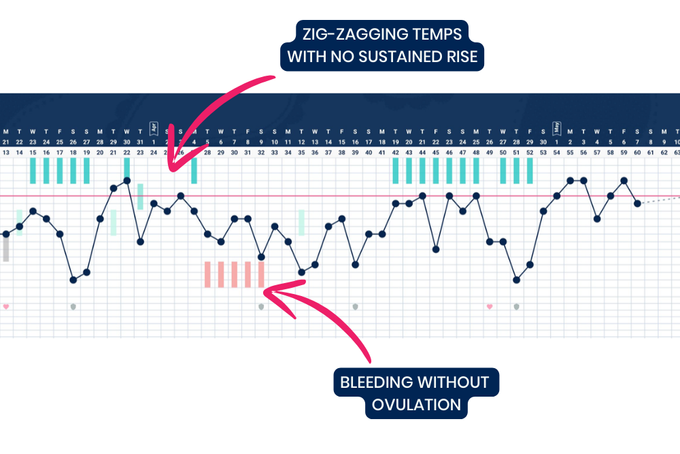
Sometimes, you may bleed without ovulating. This is common during postpartum recovery, perimenopause, or coming off hormonal birth control. However, a true menstrual period only follows ovulation.
The Sign: A "Monophasic" pattern. You will see zig-zagging temperatures with no sustained upward shift and no clear separation between low and high phases.
Special Scenarios & Troubleshooting (FAQ)
Real life rarely follows a textbook. Whether you are a new mom, suffer from insomnia, or want to enjoy a couple of glasses of wine on the weekend whilst still tracking your BBT, here is how to handle common variables that can affect basal body temperature.
Can I track BBT while breastfeeding or postpartum?
Yes! In fact, tracking your BBT is incredibly helpful during this transition. After childbirth, you may not have a menstrual period for months (lactational amenorrhea), but that does not mean you aren't fertile. Tracking your BBT helps women catch their first ovulation postpartum.
You will ovulate before you get your first period. By maintaining a daily basal body temperature log, you can catch the thermal shift that signals your fertility has returned. It’s possible to bleed without ovulating, so BBT tracking can help you identify whether this is a true period or not.
How do alcohol and illness affect basal body temperature?
Alcohol is a metabolic stimulant. If you have a few drinks the night before, your resting temperature the next morning will likely be higher than normal, especially if this is not a typical night. Similarly, a fever or illness may cause a major spike.
If you are using a manual basal thermometer, you should analyze if the temperatures have been impacted and consider marking them as questionable. If you leave them in, the artificial temperature increase might look like the detection of ovulation when it isn't. With Tempdrop, you can mark a disturbed temperature as questionable in the app - for example, if you have a fever - for the result to be excluded from your chart interpretations.
Can room temperature and pajamas worn at night affect my BBT?
With oral basal body thermometers, room temperature can raise or lower BBT. Make a note in your chart if you suspect a change to your room's temperature could have affected your BBT. Wearing pajamas or extra blankets, making you feel significantly warmer or colder than your normal temperature, could theoretically affect your basal body temperature.
However, if you have a Tempdrop, you don't need to worry about variances in room temperature. The design of Tempdrop is built around having an accurate temperature, no matter what circumstances you're temping in! It filters out the "noise" in the environment (in this case, room temperature, etc.).
What if I miss a day of measuring my basal temperature?
Don't panic. While measuring your basal body temperature every day is ideal, missing a single data point usually won't ruin your chart.
You generally need six low temperatures before the shift to confirm ovulation has occurred. If you miss a day in the middle of the follicular phase, you can usually still see the overall pattern. However, try to be as consistent as possible around the expected day of ovulation to ensure you catch the precise shift.
Ready to master the basal body temperature method?
You don't need to stress over lost sleep to get insights into your fertility. Join thousands of women who have upgraded their routine.
Fertility Tracking Made Simple
Combine BBT and mucus tracking for a complete understanding of your fertility health.