


How Tempdrop & AI Can Help You Track Your Fertility Better
Reading Time: 5 Minutes






Updated June 19, 2026

If you’ve ever wondered how technology can support your fertility journey, beyond just “Am I ovulating?” you’re not alone. Between tracking apps, smart devices, and AI tools, there’s a lot out there. But here’s the thing: while AI and chat tools (like ChatGPT) can help you understand your cycle, they don’t replace personalized guidance or the gold standard of accurate data. That’s where Tempdrop, paired with a certified fertility awareness educator or clinician, makes the difference. Tempdrop works with specialists like Hannah Fenner, a fertility awareness educator who uses Tempdrop data with her clients to provide cycle-specific interpretation that no AI tool can replicate.
What Can AI Tools Like ChatGPT Actually Do for Fertility Tracking?
- You can ask ChatGPT things like: “What signs should I watch for in my luteal phase?” or “What does a dip in basal body temperature mean for ovulation?”
- AI can help you understand patterns and terminology (BBT, cervical mucus, LH surge) so you feel less intimidated.
- This stage is great for learning and asking smart questions. But it’s not a substitute for actual tracking data or human-reviewed insights.
Why Accurate Data Matters — and How Tempdrop Delivers It
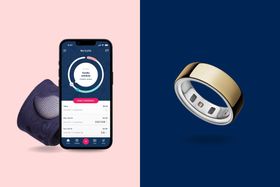
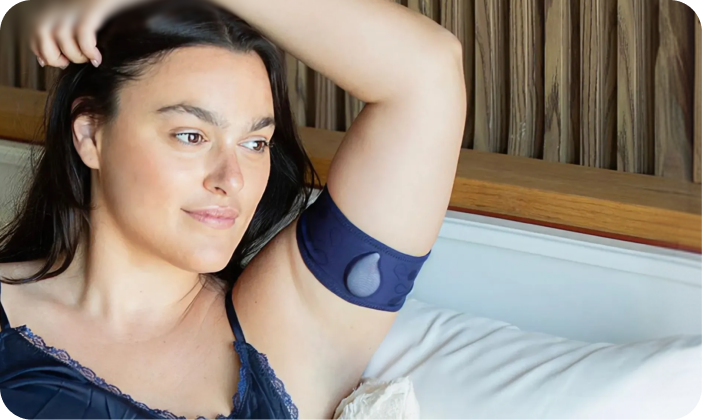
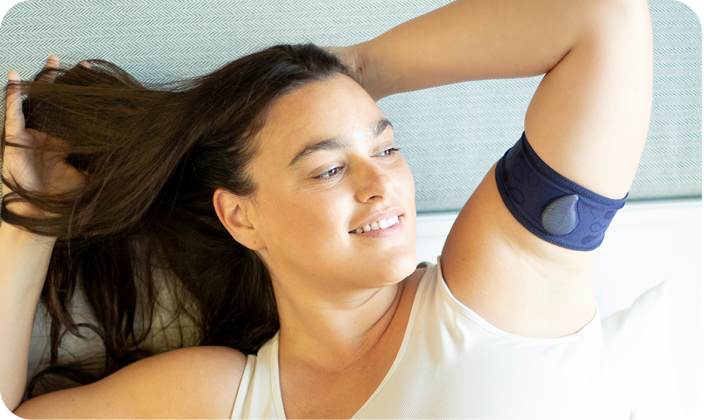
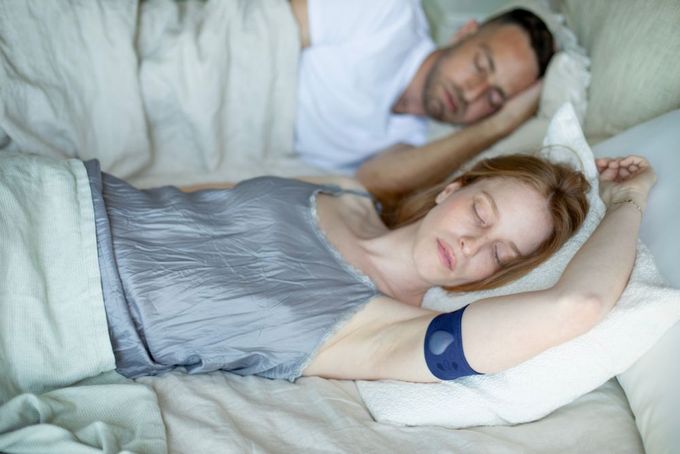
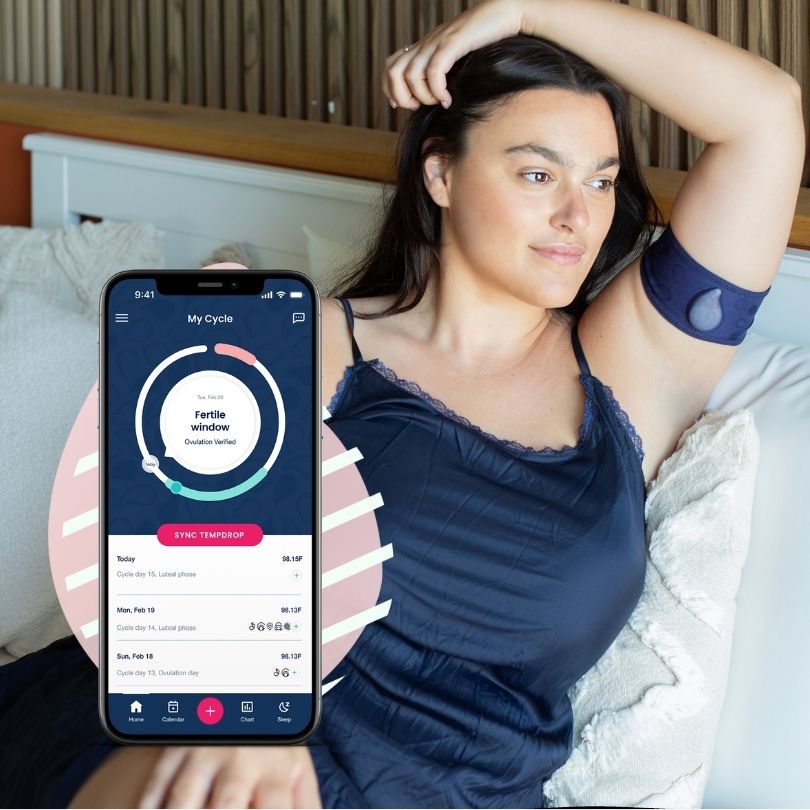
- With Tempdrop, you’re wearing a sensor on your upper arm as you sleep, capturing thousands of data readings throughout the night. When you sync, those data points are run through Tempdrop’s algorithm to give you a single, nightly basal body temperature (BBT), so you don’t have to wake at a specific time.
- The algorithm used by Tempdrop learns your unique patterns and filters out disruptions (night wakings, travel, sleep shifts) that traditional BBT methods struggle with.
- In short, the data you feed into any AI or chart review tool is only as good as what you’re measuring. Tempdrop helps raise that baseline accuracy.
- Combined: (a) accurate, rich data + (b) AI insights + (c) human expert interpretation = a powerful tracking system.
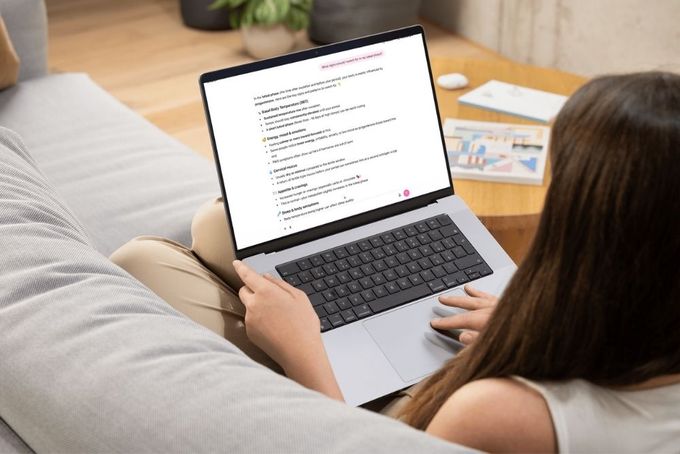
How AI Can Work with Tempdrop to Track Your Fertility Better
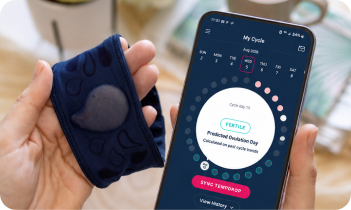
Step A: Collect accurate data with the Tempdrop sensor and app. The wearable captures your basal body temperature while you sleep and uses algorithms to learn your individual patterns.
Step B: Leverage AI tools (like ChatGPT or Gemini) to build your understanding with fertility-specific prompts. For example:
- “What could cause a short luteal phase?”
- “Why does ovulation timing change when I travel?”
Step C: If you’re ready, bring in a clinician for interpretation. They’ll look at your tracking and goals (conceiving, cycle health, irregularities) and provide personalized support.
Working with a certified clinician is a top-tier option—but it’s not the only way. If budget or access is limited, you can still make meaningful progress using AI tools + accurate tracking. And when you’re ready, a clinician is there as a next step.
Need a clinician? Check out our list of Tempdrop-approved clinicians who specialize in fertility awareness, cycle coaching, or holistic support.
The result: You’re empowered with valid data (via Tempdrop), you’re building your knowledge (via AI), and gaining expert guidance (via a clinician)—working together for smarter fertility tracking.

Real-Life Example
Imagine you’ve been tracking for a few months with Tempdrop, so you already know your typical pattern. Your temps usually rise in the luteal phase after ovulation and stay elevated until your period begins. But you notice a change this cycle.
You upload your latest Tempdrop chart and you ask ChatGPT:
“My cycle length is usually around 32–34 days. Tempdrop shows ovulation confirmed on day 15 and now on day 25 my temperature has started to dip and I feel period symptoms coming. What’s going on?”
AI tools like ChatGPT can walk you through how BBT patterns typically behave: temperatures rise after ovulation as progesterone increases, then drop again before your period starts, and external factors like stress, travel, or sleep disruptions can tweak the timing of those patterns.
Then, having Tempdrop data in hand — with your consistent night-long readings — gives your clinician a clearer picture. A clinician might say:
“Yes — you ovulated earlier this cycle and your luteal phase likely ended a bit sooner too. That early drop matches the Tempdrop chart, and we can talk through lifestyle, timing, or cycle-support strategies.”
Without accurate Tempdrop data, you’d be guessing. With it, you’re making decisions based on real temperature trends.
Why This Is a Better Strategy Than Just Using AI Alone
- AI tools can misinterpret or oversimplify fertility health—especially without accurate input.
- Many cycle irregularities come from sleep quality, circadian rhythms, travel, and stress—factors that basic tracking methods may miss. Wearables like Tempdrop are built for those nuances.
- Clinicians bring the human element: emotional support, habit change, and troubleshooting when something “looks off” in your cycle.
- Together, you’re not just tracking your fertility—you’re understanding your body, aligning your lifestyle, and making strategic decisions.

Understand Your Unique Cycle Patterns
Gain deeper insights into your cycle with accurate BBT data.
Getting Started
If you’re new: Start with an AI tool or free fertility awareness prompts (even ChatGPT). Use it to ask questions, explore your patterns, and get familiar. Then, choose a device like Tempdrop to boost the accuracy of your tracking. Finally, consider working with a cycle coach or approved clinician (especially if you’re dealing with irregular cycles, trying to conceive, or want a deeper understanding).
Checklist:
- Wear your Tempdrop sensor nightly for at least 2-3 cycles.
- Log lifestyle factors (travel, sleep changes, illness) in the app.
- Use AI to ask clarifying questions about what you see.
- Use your clinician (when/if you choose) to interpret anomalies and make improvements, as needed.
Sample AI Prompts to Get You Started with Cycle Tracking
When you’re ready to bring in AI (e.g., via ChatGPT or Gemini) to support your tracking process, here are some prompts you can try:
- “Here is my chart with my basal body temperature readings for cycle days 10-22… what patterns do you notice?”
- “My cycle this month was 33 days long, temps increased at day 22, luteal phase felt shorter… what could this mean?”
- “I traveled across time zones this month and slept less than 6 hours five nights in a row—how might this affect my fertility tracking?”
- “What are common reasons for low temperature rise after ovulation?
- “I’ve logged cramps and mood swings starting day 26 of a 30-day cycle—how might these link to hormone shifts or tracking signals?”
- “If I want to conceive within 6 months, what lifestyle, tracking, and clinician-supported steps should I focus on?”
- What lifestyle factors should I check when I’m trying to improve my luteal phase length?
These types of prompts help you interpret what the data is showing—and pair it with your lifestyle context.
See how Tempdrop stands out
Using AI to Support Fertility Tracking
AI can absolutely help you understand fertility tracking—think of it like a tutor in your corner. But when it’s paired with a tool that gives you high-quality data (that’s where Tempdrop comes in) AND a clinician who knows your story, that’s when you get real power. If you’re serious about tracking your fertility, whether for conception, cycle awareness, or health, this three-pronged model is the smart move!