The Story Behind Tempdrop’s Smart BBT Tracking


Updated January 12, 2026

Tempdrop didn’t start as a business idea or a piece of cutting-edge technology. It began with a very real problem — and a family that needed sleep.
It Started With a Struggle
Years ago, our founder, Michael Vardi, and his wife were navigating secondary infertility — the challenge of trying to conceive again after already having a child. Like many couples seeking answers, they turned to the Sympto-Thermal Method, which involved tracking their basal body temperature (BBT) every single day. On paper, BBT tracking sounds simple. In real life, it rarely is.
The Problem With Traditional BBT Tracking
Traditional BBT tracking comes with strict rules:
- Wake up at the same time every morning.
- Take your temperature before moving, speaking, or getting out of bed.
- Hope that disrupted sleep doesn’t affect the reading.
For parents of a young child — and anyone whose sleep isn’t perfectly predictable — this approach quickly becomes stressful and unsustainable.
Instead of bringing clarity, the pressure to “get it right” disrupted sleep and increased stress — two things that can actually make fertility challenges harder, not easier.

An Engineer’s “Aha” Moment
With a background in biomedical engineering, Michael looked at the issue differently. This wasn’t a failure of the body — it was a data problem.
So he asked himself:
Why rely on a single temperature “snapshot” taken in the morning, when body temperature naturally shifts throughout the night?
What if temperature could be measured continuously instead?
That insight changed everything.
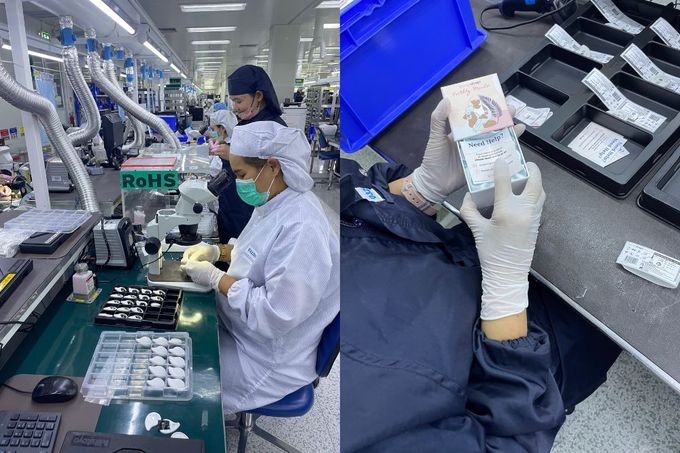
From Idea to Reality: The Birth of Tempdrop
Michael’s idea was simple but powerful: Track temperature all night long, then use smart algorithms to filter out movement, wake-ups, and disruptions — revealing the true basal temperature beneath the noise.
- No alarms.
- No rigid schedules.
- No “perfect sleep” required.
That idea became Tempdrop — a wearable designed to work with real life, not against it.

How Tempdrop Finds Your True Basal Temperature
A great idea is one thing. Building a device that actually works when you’re tossing, turning, or waking up at 3 a.m. is another.
So how does Tempdrop find your true basal body temperature — even after a rough night’s sleep?
Think of a traditional thermometer like a camera that takes one blurry photo at 6:00 a.m. If you happen to be moving, sweating, or waking at that moment, the data is compromised.
Tempdrop works differently! Tempdrop is more like a video camera, capturing temperature patterns over time instead of relying on a single moment.
Three Sensors, One Goal
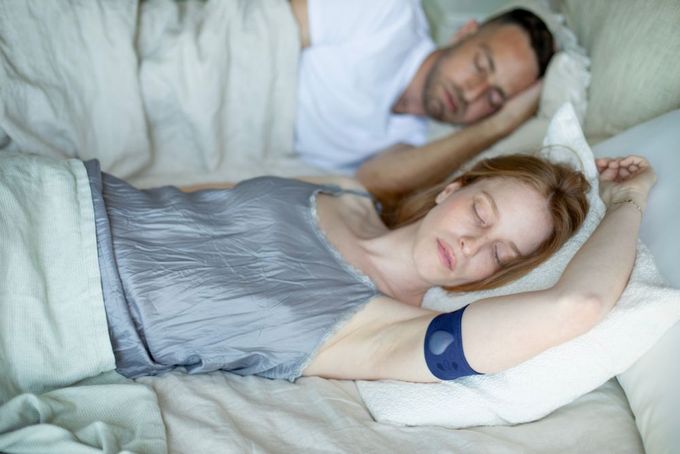
Inside the small, teardrop-shaped Tempdrop sensor, three technologies work together overnight:
- Two temperature sensors One measures your body temperature, the other measures ambient room temperature — helping account for a warm duvet or cool bedroom.
- A motion sensor (accelerometer) This tracks movement patterns, distinguishing between deep sleep and restlessness.
Together, these sensors collect thousands of data points every night.

The Algorithm That Filters the Noise
Tempdrop doesn’t look for your average. It looks for stable temperature patterns to find your most accurate BBT reading.
If you get up to use the bathroom, comfort a baby, or experience restless sleep, the motion sensor flags those moments as disturbed. The algorithm filters them out and focuses on the calm, stable periods where true basal temperature is most accurately reflected.
This process — often called active temperature-noise cancellation — is what allows Tempdrop to deliver reliable data without requiring perfect sleep.

Understand Your Unique Cycle Patterns
Gain deeper insights into your cycle with accurate BBT data.
Why This Matters for Fertility Awareness
Because of this approach, Tempdrop works for real people with real lives:
- Shift workers,
- Breastfeeding or postpartum parents,
- People with irregular schedules,
- Anyone who wants flexibility without sacrificing accuracy.
You don’t need to change your sleep to track your cycle and get accurate data - the sensor is designed for real life!
We believe that tracking your fertility shouldn't be stressful, it should be simple and accurate. From the beginning, our mission has been simple: To help you understand your body with clarity, confidence, and compassion — not perfection.
See how Tempdrop stands out