


5 Proven Fertility Trackers to Welcome Your 2026 Baby






Updated June 16, 2026

Trying to get pregnant can feel confusing when you’re not fully sure when you ovulate or how to identify your fertile window. Many women discover that tracking ovulation with a fertility app alone isn’t enough. Studies show that most women misunderstand the exact timing of their high fertility days, which can mean that conception takes longer than expected.
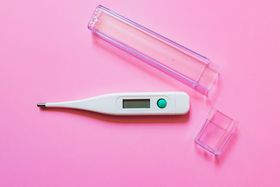
Wearable fertility monitors have become especially popular because they offer continuous data, greater sensitivity, and more reliable fertile windows to predict ovulation than traditional methods like a generic basal body thermometer or an ovulation test kit.
Before you buy an ovulation monitor, here’s what to know about how today’s top technology tracks your menstrual cycle, supports hormone awareness, and helps you predict your fertile window with confidence!
If you’re trying to conceive in 2026, choosing the right fertility tracker matters. Below, we’ll break down the best apps and tools to help you monitor ovulation, understand the days leading up to your peak fertility, and find the option that best fits your cycle.
Our Top Picks for the Best Fertility & Ovulation Trackers
- Best App for Symptom Tracking: Clue
- Best Thermometer Fertility Tracker: Daysy
- Best App for Fertility Awareness: Natural Cycles
- Best Wearable Fertility Tracker: Ava
1. Best Overall Fertility & Ovulation Tracker: Tempdrop
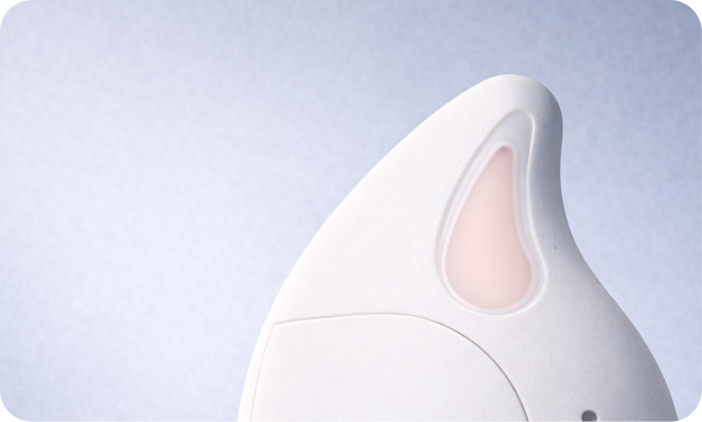
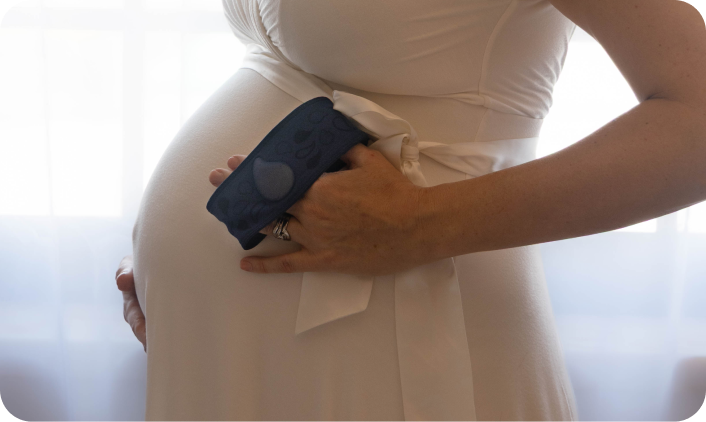
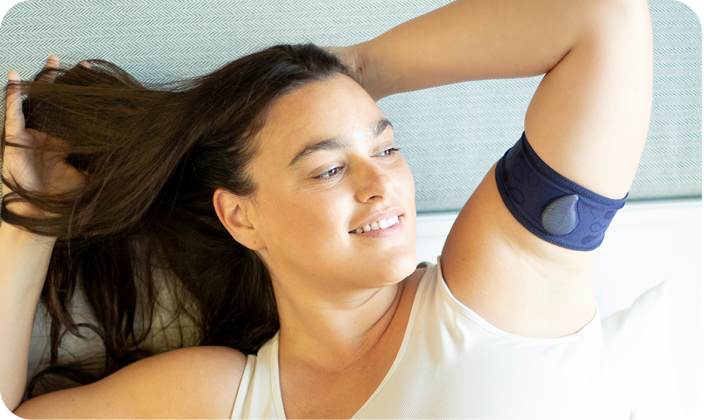
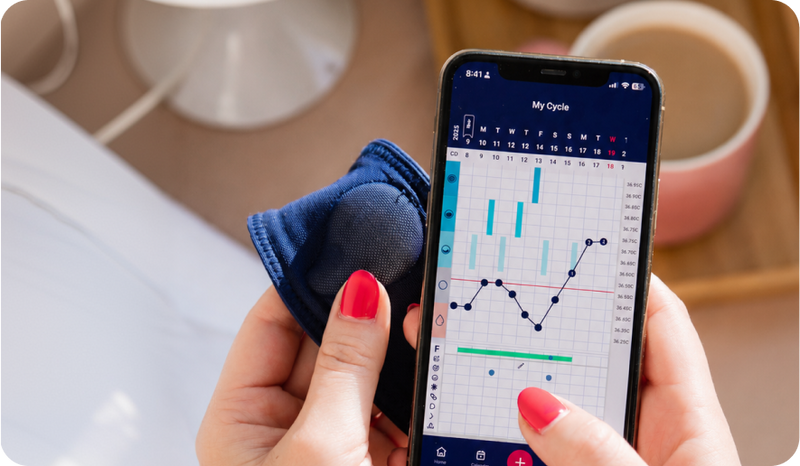
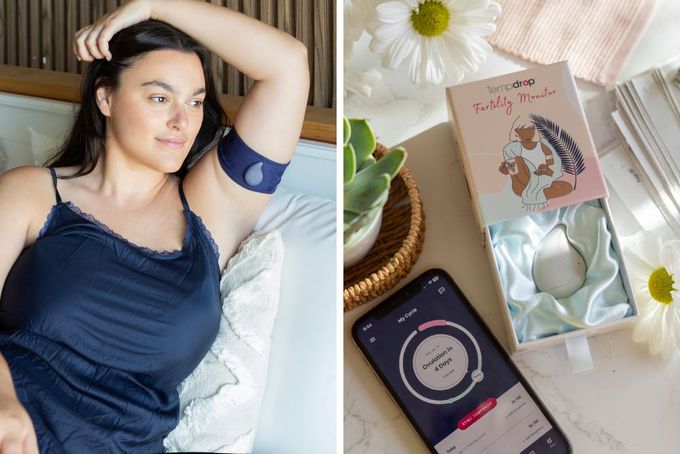
Tempdrop is FDA-registered and uses continuous temperature tracking with smart technology to give you some of the most accurate ovulation insights available. A new peer-reviewed study found that Tempdrop was highly accurate, identifying the fertile window almost 99 percent of the time, and correctly pinpointing the ovulation date in over 93 percent of cycles. These results outperformed leading wrist and ring wearables while staying completely non-invasive.
Unlike ovulation test strips or tools like the Clearblue Fertility Monitor, the Tempdrop app helps you identify your fertile window, confidently confirm ovulation, and monitor your fertility throughout your whole cycle.
Tempdrop is built to use alongside Symptothermal Fertility Awareness Methods, an evidence-based approach shown to be 99.6 percent effective with perfect use.
The sensor adapts to your personal basal body temperature rhythms rather than relying on generic fertility curves.
Cycle Tracking
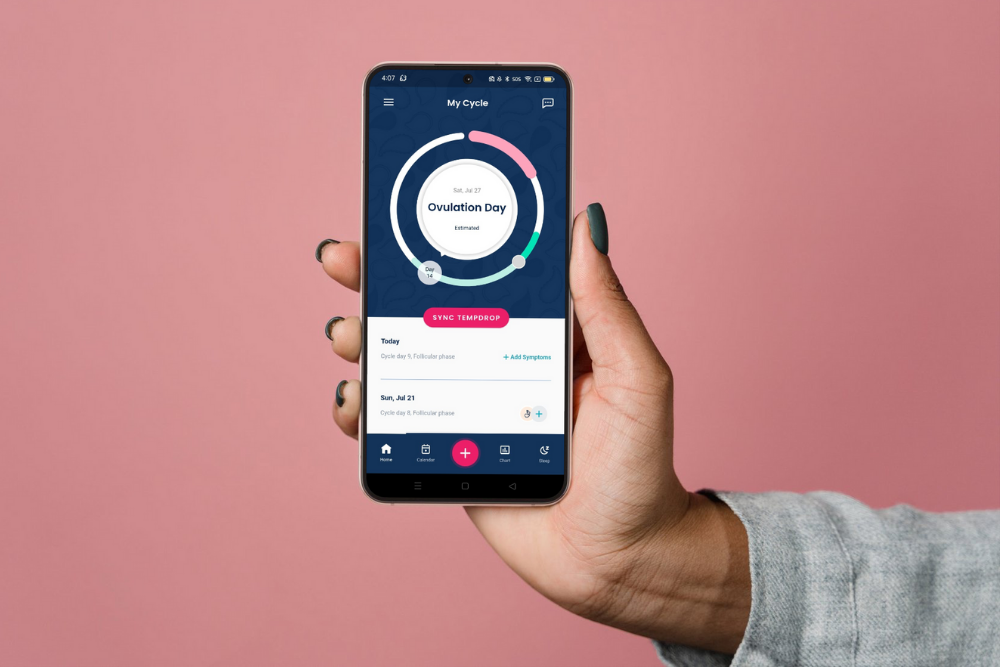
Tempdrop helps you identify high-fertility days, pinpoint ovulation day, and confirm that ovulation occurred — something ovulation tests may struggle with in irregular or hormone-affected cycles. If you’re trying for a baby, this gives you clearer insights into your chances of getting pregnant each cycle.
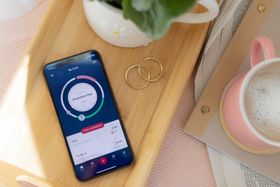
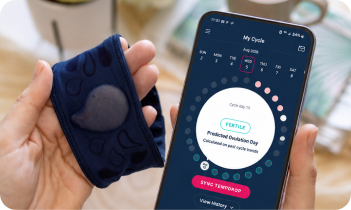
The app also lets you log cervical mucus, spotting, symptoms, and bleeding. Because it’s a smartphone app, everything syncs automatically, and Tempdrop’s newest app update will now integrate with Apple Health, making it easier to keep all your cycle and fertility data in one place!
Effective for Irregular Cycles
For irregular cycles, Tempdrop is one of the best ovulation tools available. Since it relies on the temperature rise that occurs after ovulation, it can detect ovulation even when LH levels fluctuate or when strips send confusing signals. This is particularly helpful for PCOS, postpartum cycles, long cycles, or anyone coming off birth control.
Still unsure if you ovulated?
Let our experts review your fertility chart. Discover the Conceive with Confidence Bundle.
Fertility Cycle Reports
Tempdrop combines BBT with symptoms to generate detailed charts that help you track the menstrual cycle and understand the days leading up to ovulation. It can predict up to six cycles ahead, offering deeper fertility insights and clearer expectations around your next period, fertile days, and cycle changes.
Pregnancy Tracking
Consistent temperature tracking helps identify early pregnancy and estimate how far along you might be. A sustained temperature rise after ovulation typically occurs before positive tests.
Price
Tempdrop device: $119-219 USD Tempdrop Premium app: $48 USD/yr
Pros
- Superior accuracy and efficacy
- Accurate for irregular cycles
- Convenient wearable device
- Measures your BBT while you sleep
- Tracks the quality of sleep
- Learns your unique fertility patterns
- 12-month satisfaction guarantee
- Export data to review with medical provider
Cons
- Must be manually turned on

Tempdrop 2.0 - Advanced Fertility Monitor
Tempdrop uses the latest scientific knowledge to bring you an accurate method of cycle tracking and identification of your fertile window.
2. Best App for Menstrual Cycle Symptom Tracking: Clue
Clue is one of the best fertility tracking apps for people who want an easy, app-based way to understand their cycle, moods, and symptoms. It uses algorithms to predict your period, fertile window, and expected ovulation based on the information you log. This includes cycle length, period details, cervical mucus changes, and any symptoms you notice throughout the month.
Cycle Tracking
You can track bleeding, spotting, discharge, moods, and physical symptoms, and Clue will analyze everything to show patterns across your menstrual cycle. While it doesn’t confirm ovulation through temperature or luteinizing hormone (LH) like an ovulation predictor kit, it helps learn how your cycle shifts from month to month — especially if you’re trying to understand your fertile days or the hormone changes that happen during the five days leading up to ovulation.
Clue vs. Natural Cycles: What’s the Difference?
Many people find themselves choosing between Clue vs. Natural Cycles when starting their fertility journey. The main difference lies in how they predict ovulation.
- Clue is primarily a period tracker that uses a calendar-based algorithm. It predicts your fertile window based on your historical cycle data. It is excellent for tracking symptoms but less effective for confirming ovulation if you have irregular cycles.
- Natural Cycles is an FDA-cleared app that uses Basal Body Temperature (BBT) to confirm ovulation has occurred. Because it relies on biological data (temperature), it is generally considered more accurate for pinpointing the fertile window than calendar-only apps.
Important Note: A temperature-based algorithm is only as reliable as the data collected. Accuracy depends on capturing a true resting temperature—which can be difficult with a standard oral thermometer if you have an inconsistent sleep schedule, wake up at different times, or frequently toss and turn. That's where Tempdrop shines! It tracks your temperature throughout the night, ensuring that your fertility insights are based on consistent, high-quality data without the morning stress.
Not Effective for Irregular Cycles
Clue is not my top recommendation for irregular cycles. Since it relies on user-entered data rather than hormone levels, LH surges, or temperature changes, predictions can be less accurate for people whose cycles vary month to month. If you’re dealing with PCOS, coming off birth control, or navigating fertility issues, a tool that measures actual biomarkers — like BBT or LH — will give you more reliable detection of ovulation.
Fertility Cycle Reports
Clue can plan up to twelve cycles ahead with a Plus subscription and gives you helpful charts related to your period and fertility, showing how symptoms shift week to week. This makes it a great option if you’re looking to better understand your cycle, even though it’s not as strong for confirming ovulation day.
Pregnancy Tracking
If you become pregnant, the app provides supportive content, pregnancy insights, and self-care tips. You’ll get updates on fetal development, what to expect each week, and reminders to take care of yourself, which is appreciated!
Price
Clue subscription: $9.99 USD/mo or $39.99 USD/yr
Pros
- Affordable
- Helps you track your moods
Cons
- Can't track your BBT, cervical mucus, or OPK results
- Not as effective for irregular cycles
3. Best Basal Body Temperature Thermometer Fertility Tracker: Daysy
Daysy is a popular fertility tracker for people who prefer a simple, thermometer-based option instead of apps and tools that rely on hormone testing. An independently reviewed analysis found that Daysy has 99.4 percent accuracy in identifying fertile days versus not-fertile days, making it one of the more reliable BBT-only devices on the market.
Cycle Tracking
Daysy measures your morning basal body temperature and syncs it with the app on your phone. From there, it provides predictions about your fertile window, the day of ovulation, and your overall cycle patterns. Because it does not measure LH surges, urine tests, or hormone levels, it relies heavily on consistent temperature readings 48 hours before ovulation and after the shift that confirms ovulation.
May Not Be Effective for Irregular Cycles
In my experience, Daysy isn’t the best fit for irregular cycles or anyone navigating fertility issues. Without LH or cervical mucus tracking, pinpointing ovulation can be harder if your cycle varies month to month. Many women with irregular ovulation report getting more yellow or red days, which indicate “learning” or “fertile” days, even when they’re not actively in their fertility window.
Fertility Cycle Reports
Daysy uses easy color coding to indicate fertility status — yellow for caution days, red for fertile days, green for not-fertile days, and purple for menstruation. This makes it simple to understand your fertility insights at a glance, even if it’s not as robust as other fertility tracking methods like Tempdrop, Mira, or Inito.
Pregnancy Tracking
You can continue tracking your temperature after you conceive, but keep in mind that Daysy is designed primarily to confirm ovulation and help you understand your cycle. It’s not intended to function as a full pregnancy monitor, and it doesn’t track hormone changes the way clinical tools or a fertility clinic would.
Price
Daysy Device: $249-$319 USD
Pros
- Efficacy
- Data exporting for medical guidance
Cons
- Not ideal for pregnancy tracking
- Users may forget to take temps
- More expensive
4. Best App for Overall Fertility Awareness: Natural Cycles
Natural Cycles is one of the best-known apps for overall fertility awareness, using daily basal body temperature (BBT) and algorithm-based predictions to help you understand when you’re most likely to ovulate.
Research shows the method is up to 99.6% effective with perfect use and 98.2% effective with typical use. It’s a solid option if you want an app that tracks your cycle without relying on LH tests or hormone monitors like the Clearblue Advanced Digital Ovulation Test, Mira Fertility Tracker, or other at-home urine-based tools.
Cycle Tracking
Natural Cycles helps you get familiar with your body’s signs of fertility by clearly labeling fertile and not-fertile days. Over time, you’ll see patterns in your cycle, the fertility window, and how closely your temperature shift lines up with ovulation and the day after ovulation. Because it’s BBT-based, the app works best when you take your temperature in the morning before getting out of bed.
May Not Be Effective for Irregular Cycles
For irregular cycles, Natural Cycles can be trickier. BBT alone may not pinpoint ovulation as accurately when your cycle fluctuates or when external factors (travel, sick days, stress, or late nights) affect your temperature. People with PCOS or unpredictable cycles often find they get more “low fertility” or “caution” days than they’d like, especially compared to hormone-based tools like Mira and Inito that track urine hormone levels directly.
Plan with Confidence
Begin your conception journey with Tempdrop's advanced fertility tracking package.
Fertility Cycle Reports
Inside the app, you can view charts and graphs that show trends in your period, cycle length, fertile window, and ovulation timing. It’s helpful if you love data and want to understand how your cycle shifts over time. You can also review past cycles — including your last period — to see long-term changes in your fertility patterns.
Pregnancy Tracking
Once you get pregnant, Natural Cycles allows you to switch to Pregnancy Mode. You’ll get supportive content about fetal development, body changes, and self-care tips — all within the same app that tracks your cycle. It's a simple way to continue monitoring your body without needing a separate pregnancy app.
Price
Natural Cycles Thermometer: $49.99 USD
Natural Cycles Subscription: $12.99 USD/mo or $99.99 USD/yr
Pros
- Great app for FAM
- High efficacy with perfect use
Cons
- Expensive for long-term use
- Relies on manual data entry
- Not as effective for irregular cycles
5. Best Wearable Fertility Tracker: Ava
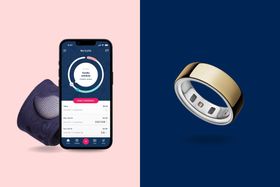
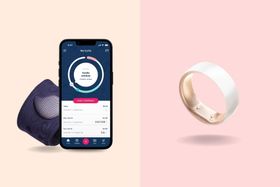
Ava is one of the most popular wearable devices for women who want hands-free, at-home support to track your fertility. The bracelet is worn on your wrist overnight and uses physiological signals to estimate your five most fertile days, making it a convenient option if you prefer a wearable instead of temperature taking or hormone-based tools.
Cycle Tracking
Ava collects multiple biomarkers while you sleep — including skin temperature, resting pulse, and breathing rate — and translates them into daily fertility insights. It’s simple, consistent, and doesn’t require an app in the morning the way BBT-based methods do. If you’ve used Mira, Clearblue, or other biomarker-based tools, Ava provides a very different fertility experience focused on physiologic trends rather than what ovulation tests measure with a urine test stick.
May Not Be Effective for Irregular Cycles
Ava isn’t the best choice for irregular periods or PCOS. When cycles vary from month to month, Ava’s predictions can be less accurate — especially for identifying your known fertility window or confirming ovulation. People with irregular cycles or fertility issues often do better with hormone-based trackers, which provide clearer signals across different fertility patterns.
Pregnancy Tracking
If you become pregnant, Ava lets you continue using the wearable through your pregnancy. The app provides week-by-week content, body changes, and helpful insights as you progress — making it a smooth transition from fertility tracking to pregnancy support.
Price
Ava Device: $279-359 USD
Pros
- Tracks temps while you sleep
- Refund if you are not pregnant within 6 to 12 months
- More sensitive than oral BBT
Cons
- Most expensive
- Not as comfortable to wear during sleep
- Not as effective for irregular cycles
Fertility Awareness Made Simple
When you’re trying to track your fertility, understand your hormones, or pinpoint when you ovulate, choosing the right tool matters. After comparing apps, LH ovulation predictor kits, cervical mucus tracking, and hormone-based options, Tempdrop continues to stand out!
Understand Your Unique Cycle Patterns
Gain deeper insights into your cycle with accurate BBT data.
Why Tempdrop Reigns Supreme
If you want the best ovulation and fertility tracking experience for a 2025 baby, Tempdrop is my top recommendation. As both a fertility coach and a personal user, I trust it above every other wearable or fertility awareness method app.
Tempdrop tracks BBT while you sleep, making it easy to confirm ovulation without early alarms, test sticks, or urine-based LH tests. It’s especially helpful if you're managing irregular cycles, PCOS, or coming off birth control.
Tempdrop simplifies the entire process so you can focus on understanding your cycle, supporting healthy hormones, and giving yourself the best chance of getting pregnant with a 2026 baby!