


Is one of your goals for this year to grow your family? Perhaps this has been a longer-term plan that you have been working towards already, or perhaps it’s a recent decision for you and your partner. Either way, we’re sure that part of your plan would include one or more of the following:
- Coming off of hormonal birth control.
- Tracking your period.
- Cutting out alcohol.
- Taking a prenatal vitamin.
- Improving nutrition.
All of these factors contribute to egg health. Many of them also affect sperm health for your partner, so you can even do a lot of them together!
However, the number one key to conceiving for the majority of the population is accurately identifying ovulation.
What is ovulation?
Ovulation is when an egg is released from the ovary, and it is the event that dictates when fertilization can occur.
Conception can only take place around ovulation, and ovulation happens only ONCE each cycle. We are often led to believe that women ovulate on day 14 of their cycle and have a 28-day cycle. In reality, you could be ovulating earlier or later in your cycle, meaning that if you assume ovulation on day 14, you might be missing your optimal time for conception.
How do you know if you are ovulating, and when?

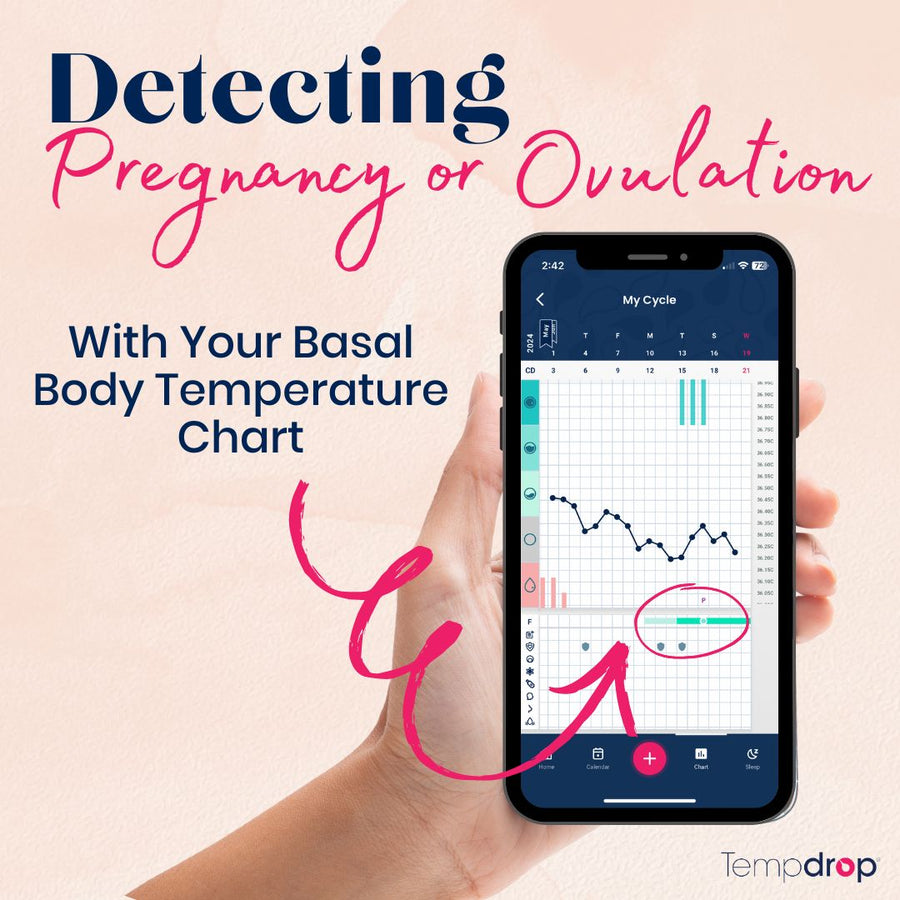
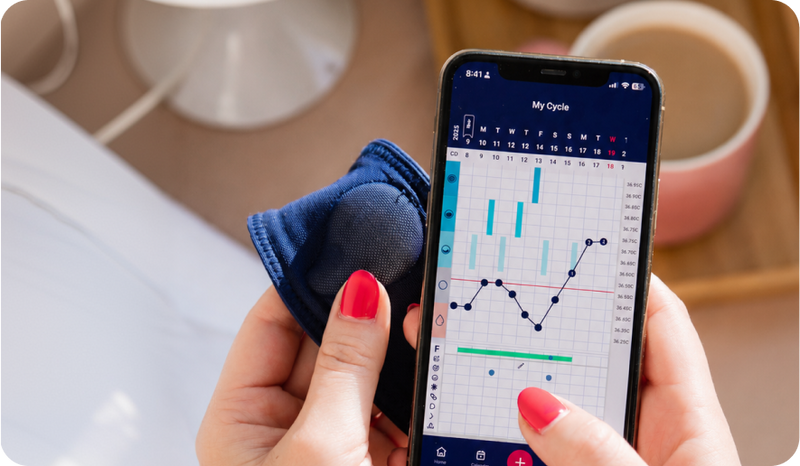
By simply tracking your fertility biomarkers, you can identify ovulation. Every woman's body provides signs about their fertility - we just need to learn how to read them. The first way we will cover in this article is by tracking your basal body temperature (BBT). You can track this symptom daily to understand when you have ovulated retroactively.
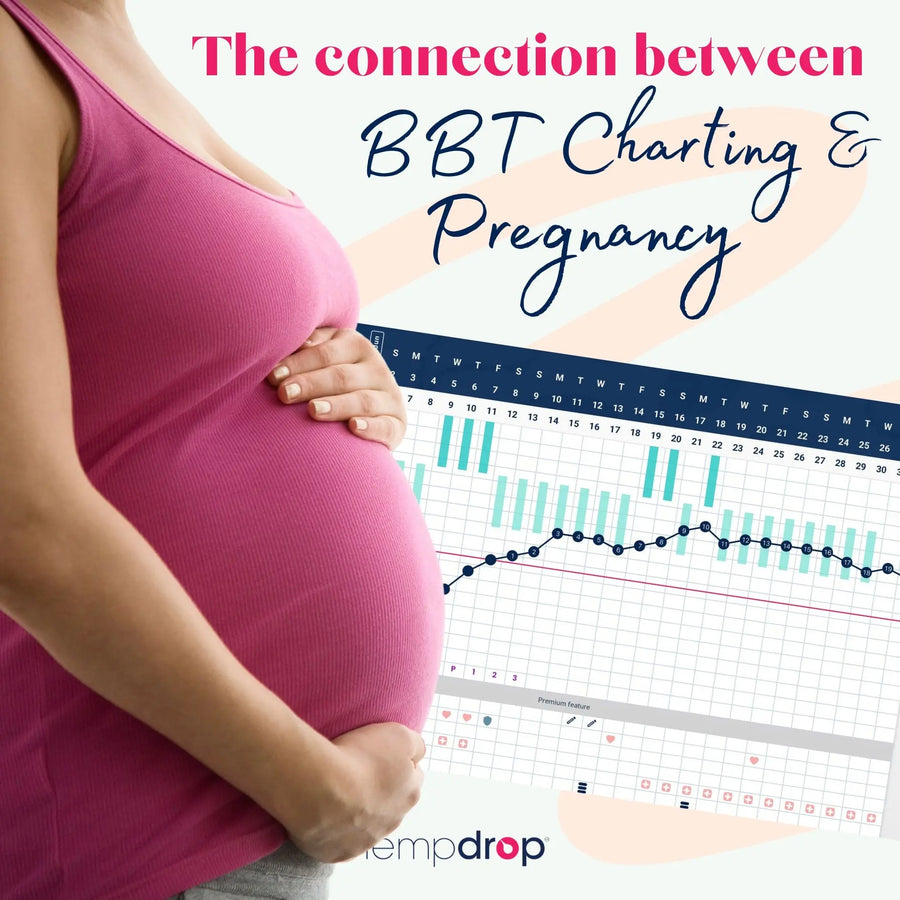
Body temperature is influenced by the cyclic ebb and flow of hormones in women. Prior to ovulation, temperatures generally run in a lower range; once ovulation has occurred, they will jump to a higher range. This rise in temperature remains sustained from the time of ovulation to the end of the cycle, when it will drop again at your next period. Or, in the case of a successful pregnancy, temperatures will remain elevated through early pregnancy.
BBT doesn’t predict ovulation, but it is excellent at helping to confirm ovulation has happened. And as a bonus, it also provides excellent insights into hormone health! BBT can tell you:
- How long your luteal phase is (time from ovulation to your next period). Ideally, this should be a minimum of 10 days.
- If you have an unusual temperature pattern. This can indicate a hormone imbalance, such as PMOS.
- If your luteal phase temperatures are unusually low or if they rise slowly, instead of a sharp increase. This can indicate low progesterone.
Having this information available to you can help you identify potential issues and enable you to work with a practitioner to make improvements in your hormonal health.
If BBT doesn't predict ovulation, how can you know when it is happening?
By tracking a second fertility biomarker (or sign our body provides to us): cervical mucus. Cervical mucus (sometimes known as cervical fluid, shortened to CM or CF) is a bodily fluid produced in the cervix. It serves the purpose of neutralizing the otherwise hostile environment of the vagina and nourishing sperm. The role of CM is to keep sperm alive for up to 5 days and assist sperm in their travel to meet the egg. Throughout the cycle, CM changes in quality and quantity. These changes indicate when ovulation is approaching.
Just after your period, generally, little or no cervical fluid will be produced. As ovulation nears, you can notice a change in its appearance as it becomes more fertile. After ovulation, production stops again, and mucus becomes thick to form a barrier plug in the cervix. Carefully observing your CM throughout the day each day will help you identify when ovulation is near and, combined with temps, can help you confirm that ovulation has happened. When you’re trying to conceive, this is the start of the “two-week wait” - or the wait between ovulation and your expected period or pregnancy confirmation.
You may also choose to track additional signs:
- Luteinizing hormone tests (to help you understand when ovulation is potentially approaching).
- Progesterone tests (to confirm sufficient progesterone after ovulation).
- Cervix height, texture, and openness (it opens as ovulation approaches and closes again after).
Tracking these vital signs provides you with key information about your own body and working to address your nutritional needs, lengthen your luteal phase, and ultimately optimize your chances of conception. All of these can help you to achieve a healthy pregnancy this year.