



Prolactin: What You Need to Know About the "Milk Hormone"






Updated October 3, 2026

Medically Reviewed by Dr. Mona Wiggins, October 2026. The information provided in this article is for educational purposes only and is not intended as a substitute for professional medical advice, diagnosis, or treatment.
Prolactin is a hormone produced primarily by the pituitary gland that promotes breast milk production, also known as lactation. While best known for supporting breastfeeding postpartum, prolactin also influences reproductive hormone signaling and ovulation. When prolactin remains elevated, during breastfeeding or for other reasons, it can suppress ovulation and delay the return of menstrual cycles.
If you’ve spent any time learning about fertility hormones, you’ve probably heard plenty about estrogen, progesterone, follicle-stimulating hormone (FSH), and luteinizing hormone (LH). But there’s another hormone that can significantly influence whether—and when—you ovulate: prolactin.
Often nicknamed the "milk hormone," prolactin is especially important postpartum. If you're breastfeeding and wondering when your fertility will return, whether you're ovulating yet, or why your cycle chart suddenly looks different, understanding prolactin can help make sense of what your body is doing.
What is Prolactin and What Does It Do?
How does prolactin support breastfeeding?
Prolactin is produced in the anterior pituitary gland in the brain. Prolactin levels increase substantially throughout pregnancy, helping the breasts prepare for milk production. Although prolactin is already high during pregnancy, other hormones like progesterone prevent notable milk secretion before birth.
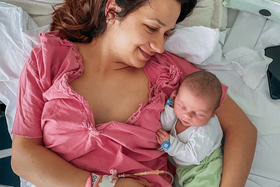
After birth, prolactin levels remain elevated while estrogen and progesterone fall, allowing prolactin to stimulate milk production. Breastfeeding and suckling at the breast stimulate further prolactin release, helping to maintain milk production. Without breastfeeding (or continued milk removal via pumping), prolactin levels decline, and milk supply gradually decreases over time.
What else does prolactin do in the body?
Although prolactin is best known for lactation, research suggests it has broader roles throughout the body, including reproductive health, metabolic function, and immune regulation. These effects occur in both women and men, although prolactin's reproductive effects differ between the sexes.
For fertility and cycle tracking, however, one of its most important effects is its influence on the hormonal signaling required for ovulation.
How Does Prolactin Affect Ovulation and Fertility?
To understand prolactin and ovulation, it helps to look at the communication between the brain and ovaries.
Each cycle, the brain releases gonadotropin-releasing hormone (GnRH) in pulses. GnRH triggers the release of FSH, which supports the development of ovarian follicles and the rise of estrogen. When a dominant follicle(s) has matured, and estrogen reaches sufficiently high sustained levels, this sends a signal to the brain to release luteinizing hormone (LH), which triggers ovulation.
How does high prolactin suppress ovulation?
During breastfeeding, frequent suckling and elevated prolactin contribute to suppression (or alteration) of the pulsatile GnRH signaling, which can disrupt the normal hormonal sequence needed for follicular development and ovulation (Kennedy et al., 1989). The result is that ovulation may be delayed or temporarily absent while prolactin remains elevated.
During the immediate postpartum period and during active breastfeeding, this is a normal body response. As breastfeeding frequency and duration decrease, prolactin generally declines, and reproductive hormone signaling can gradually resume. Some women regain fertility relatively quickly while breastfeeding, while others may remain without menstrual cycles for many months.
What is the Lactational Amenorrhea Method (LAM)?
Breastfeeding naturally delays the return of fertility for many women, but breastfeeding alone is not a foolproof method of preventing pregnancy. If you are considering the Lactational Amenorrhea Method (LAM) for contraception, review its effectiveness and specific criteria with your partner and healthcare provider to decide whether it feels appropriate for you.
The Lactational Amenorrhea Method (LAM) is a defined temporary contraceptive method that relies on breastfeeding-related suppression of ovulation (Labbok et al., 1994). According to official guidance from the CDC and a major Cochrane systematic review, LAM is over 98% effective at preventing pregnancy when all three criteria are met:
- You are less than six months postpartum.
- Menstruation has not returned (amenorrhea after postpartum bleeding stops).
- You are fully or nearly fully breastfeeding (with intervals between feeds not exceeding four hours during the day or six hours at night).
ACOG similarly recognizes LAM as a temporary contraceptive option when specific breastfeeding and postpartum criteria are met.
Once these criteria are no longer satisfied, another contraceptive method should be used if avoiding pregnancy is important to you.
It is important to keep in mind that ovulation occurs before the menstrual period that follows it. Your first postpartum ovulation can therefore happen before you have experienced your first postpartum period.
How to Track Your Cycle While Breastfeeding
Postpartum cycle tracking can feel like entering completely new territory—even if you understood your cycles beautifully before pregnancy.
What happens to your BBT while breastfeeding?
In a typical ovulatory cycle, progesterone rises after ovulation and causes basal body temperature (BBT) to rise. This creates a biphasic (two-part) temperature pattern: generally lower temperatures before ovulation followed by a sustained higher-temperature pattern after ovulation.
When you are breastfeeding, before postpartum ovulation returns, your chart may show fluctuating temperatures without establishing a clear biphasic pattern due to the lack of ovulation and the absence of a sustained post-ovulatory rise in progesterone.
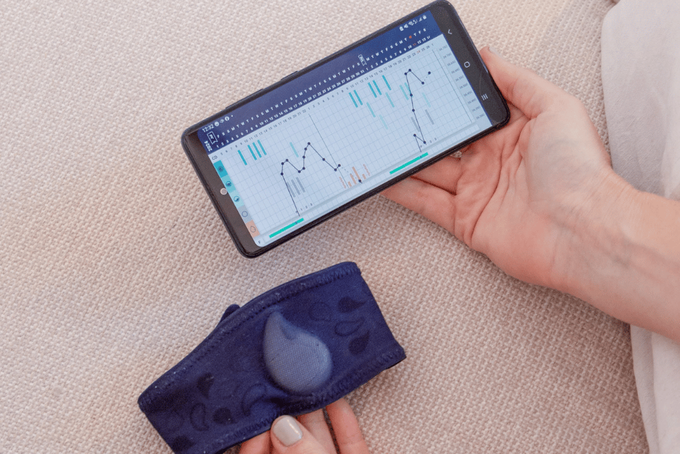
Traditional oral BBT monitoring can be particularly confusing postpartum because waking frequently to feed or soothe a baby, fragmented sleep, changing wake times, and shifting hormones can all contribute to inconsistent temperature readings.
How can Tempdrop help with postpartum cycle tracking?
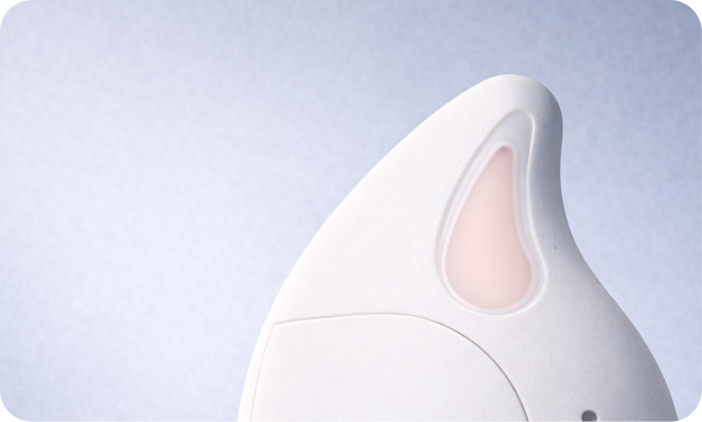
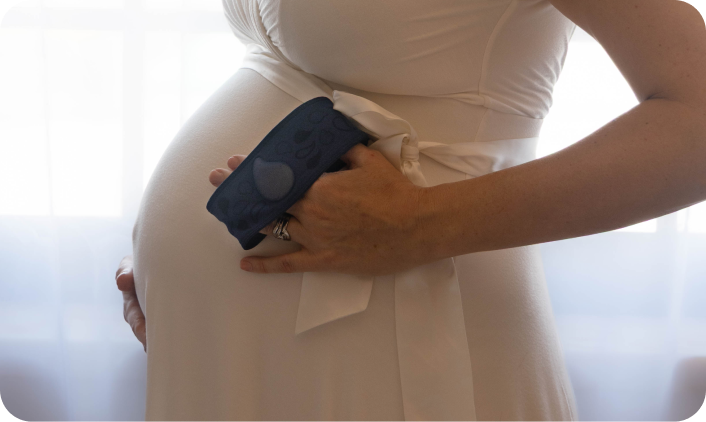
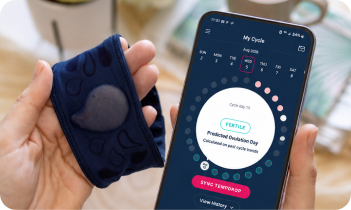
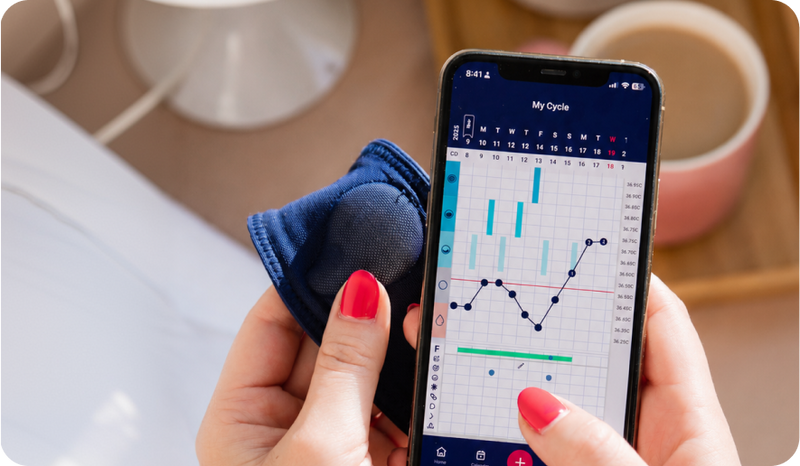
Rather than relying on a single oral temperature taken immediately upon waking, Tempdrop collects temperature data throughout the night while you sleep and uses its algorithm to filter out disturbances to provide more reliable temperature results for fertility charting.
This makes it particularly well suited to postpartum life: you don't need to wake at the same time every morning to take your temperature, which can make tracking more manageable when sleep is interrupted by nighttime feeds and newborn care.
As ovarian activity resumes, tracking temperature trends over time can help you identify the sustained thermal shift associated with ovulation.
What Causes High Prolactin When You Aren't Pregnant or Breastfeeding?
High prolactin is expected during pregnancy and breastfeeding. Outside of these circumstances, persistently elevated prolactin is known as hyperprolactinemia.
There are several possible causes, and an elevated prolactin result does not automatically mean something serious is wrong. However, if elevated prolactin is suspected and you are not breastfeeding or pregnant, you should have an evaluation.
Common causes of elevated prolactin unrelated to pregnancy or breastfeeding can include:
- Prolactin-secreting pituitary tumors called prolactinomas
- Conditions affecting the pituitary gland or surrounding structures
- Certain medications, most commonly antipsychotics
- An underactive thyroid (hypothyroidism)
- Chronic kidney disease
- Stress
- Nipple stimulation or chest wall injury
What are the symptoms of high prolactin?
Possible symptoms include:
- Irregular or absent menstrual periods
- Difficulty ovulating
- Difficulty conceiving/infertility
- Unexplained milk production (galactorrhea)
Some people may have few obvious symptoms.
If you are experiencing these symptoms without a clear reason, talk with your healthcare provider or endocrinologist to see if a prolactin blood test is appropriate.
Prolactin and Fertility - Frequently Asked Questions
Does prolactin completely stop ovulation?
Not necessarily. Elevated prolactin can suppress the hormonal signaling needed for ovulation, but the degree of suppression varies. This helps explain why fertility returns at different times for different breastfeeding women.
Can I get pregnant if my prolactin levels are high?
Yes, pregnancy may still be possible as long as you are ovulating. However, persistently high prolactin can make conception more difficult when it interferes with normal reproductive hormone signaling and ovulation.
How long does it take for prolactin levels to drop after I stop breastfeeding?
There isn't one universal timeline. Prolactin generally declines as breastfeeding frequency decreases and after weaning, but the timing of hormone normalization, ovulation, and menstrual-cycle return varies between individuals.
What does prolactin mean for your fertility and cycle?
Prolactin is a normal, healthy hormone with an important job, especially during pregnancy and breastfeeding. But because prolactin also influences the hormonal signaling required for ovulation, it can significantly shift your fertility signs and menstrual cycle postpartum.
If you're breastfeeding and waiting for your fertility to return, remember that your first period isn't necessarily the first sign that your cycle is returning. Ovulation comes first.
Tracking fertility signs, including cervical mucus and the temperature shift that follows ovulation, can help you understand what your body is doing before your cycles become predictable again.
And during a season when uninterrupted sleep may be hard to come by, wearable temperature tracking can make one piece of postpartum cycle tracking easier.
Ready to learn more about your postpartum fertility?
Learn how Tempdrop makes postpartum tracking easier.
About the Author
Dr. Mona Wiggins, DNP, FNP-C
Dr. Mona Wiggins is a doctorally prepared, board-certified Family Nurse Practitioner with nearly two decades of experience in medicine. Her work focuses on functional medicine, fertility awareness, hormone and cycle health, gut health, and individualized health optimization. Through Medicine with Mona, she helps women better understand their bodies, fertility signs, and hormonal rhythms so they can make more informed decisions about their health.
References
- American College of Obstetricians and Gynecologists (ACOG). Postpartum Birth Control. ACOG Women's Health FAQs. https://www.acog.org/womens-health/faqs/postpartum-birth-control
- Centers for Disease Control and Prevention (CDC). Appendix G: Lactational Amenorrhea Method. U.S. Medical Eligibility Criteria for Contraceptive Use, 2024. Updated September 26, 2025. https://www.cdc.gov/contraception/hcp/usmec/lactational-amenorrhea-method.html
- Calik-Ksepka A, Stradczuk M, Czarnecka K, Grymowicz M, Smolarczyk R. Lactational Amenorrhea: Neuroendocrine Pathways Controlling Fertility and Bone Turnover. International Journal of Molecular Sciences. 2022;23(3):1633. doi:10.3390/ijms23031633.
- Melmed S, Casanueva FF, Hoffman AR, et al. Diagnosis and Treatment of Hyperprolactinemia: An Endocrine Society Clinical Practice Guideline. Journal of Clinical Endocrinology & Metabolism. 2011;96(2):273–288. doi:10.1210/jc.2010-1692.
- Gorvin CM. The prolactin receptor: Diverse and emerging roles in pathophysiology. Journal of Clinical & Translational Endocrinology. 2015;2(3):85–91. doi:10.1016/j.jcte.2015.05.001. PMID: 29204371; PMCID: PMC5685068
- Cochrane Systematic Review (Efficacy & Evidence Benchmark) Van der Wijden, C., Brown, J., & Kleijnen, J. (2015). Lactational amenorrhoea method for family planning. Cochrane Database of Systematic Reviews, (10), CD001329. https://doi.org/10.1002/14651858.CD001329.pub2
- Bellagio Consensus (Foundational Physiological Criteria) Kennedy, K. I., Rivera, R., & McNeilly, A. S. (1989). Consensus statement on the use of breastfeeding as a family planning method. Contraception, 39(5), 477–496. https://doi.org/10.1016/0010-7824(89)90103-0
- Labbok, M. H., Perez, A., Valdes, V., et al. The lactational amenorrhea method (LAM): a postpartum introductory family planning method with policy and program implications. (1994) Advances in Contraception, 10(2), 93–109. https://doi.org/10.1007/BF01978103