



Fertility Q&A
What do I need to track temperature?
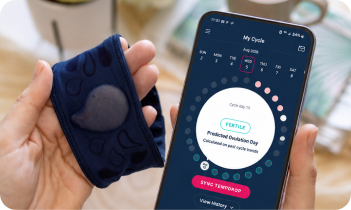
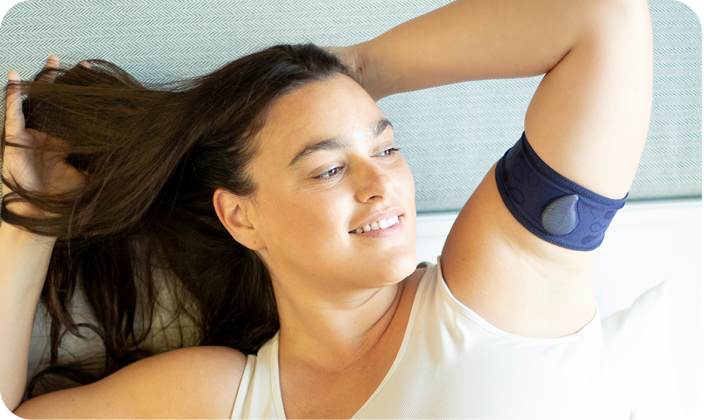
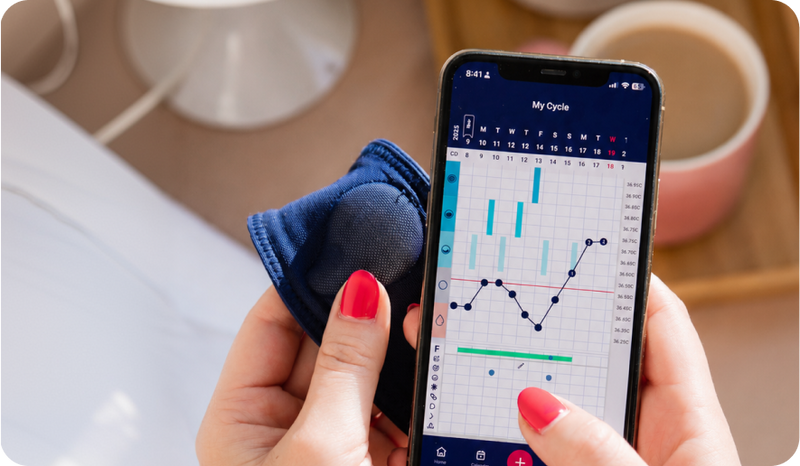
You need a thermometer specifically designed for measuring basal body temperature (fever thermometers aren’t precise enough). Tempdrop will simplify your temping routine!
En savoir plusWhat makes temperature a biomarker for tracking fertility?
Estrogen suppresses body temperature, while progesterone raises it. The combination of the two creates a measurable temperature shift at ovulation when the body switches from having majority estrog...
En savoir plusWhat can I do if I don’t have any cervical mucus, or only very small amounts?
First, make sure you’re checking properly! Also, check your diet and make sure you’re getting enough water, as well as maintaining optimum vitamin levels. Check out this article for more tips.
En savoir plusWhat do I need to track cervical mucus?
You don’t need anything fancy to track cervical mucus! All you need is toilet paper, the knowledge of what you’re looking for, and how to distinguish between categories.
En savoir plusCervical mucus is a fluid made from glands inside of tiny crypts in the cervical canal. It lubricates the vagina and provides a less-hostile environment for sperm than the natural vaginal environment.
En savoir plusCan I confirm ovulation by ovulation pain?
No. Some women get pain around ovulation - light cramping, ovary pain, etc. However, these aren’t always signs of ovulation; they can happen before, during, or after ovulation. These are considered...
En savoir plusCan I ovulate more than once per cycle?
No! You only ovulate once per cycle. However, you can release two or more eggs within the same ovulation period. That’s how fraternal multiples happen!
En savoir plusI usually get my period like clockwork - why am I late this cycle?
There’s no way to know why your cycle is delayed, but it’s actually ovulation that’s delayed rather than your period, since each woman’s luteal phase length (from ovulation to menstruation) is rela...
En savoir plusCan I use barriers while using fertility awareness?
This is completely up to you! When you use fertility awareness, the ball is in your court. You get to decide what is or isn’t too much risk. While abstinence provides the most security over your fa...
En savoir plusYour baby is about the size of a pineapple at week 33, and by week 34 baby will be the size of a cantaloupe. Your baby’s body is really getting ready for the outside world now! Their bones are hard...
En savoir plus